






Manchester United have had a poor start to the season. The Red Devils currently sit 14th in the Premier League, taking just seven points from their opening six matches.
It’s only one point better than their worst ever start to a campaign, which came last season.
Ruben Amorim finds himself under pressure already, after big losses against Manchester City and Brentford in the league. Not to mention being knocked out of the Carabao Cup by Grimsby Town in the second round.
Dabble sign-up offer: Bet £10+ & Receive £10 In Free Bets
Not signed up to Dabble yet? Here's how to claim the Bet £10+ & Receive £10 In Free Bets welcome offer:
- Sign up to Dabble through this link
- Register your account with accurate personal details
- Place your first bet of £10 or more
- Receive your £10 in free bets when your qualifying bet has setted
- Use your Free Bet on any eligible sportsbook market within 7 days

#AD 18+ 7-day free bet expiry. Stake not returned. Promotional Terms Apply. GambleAware.org
In this article, we’ll cover
Ruben Amorim’s issues
The main conversation around Amorim stems from his insistence to remain in his current 3-4-3/3-4-2-1 system. But the formation is far from the biggest problem.
Man Utd are averaging 53.4% possession in the league this season. They average the most shots in the league (15.8 per game) and have generated the highest Expected Goals total (12.26) after six games.
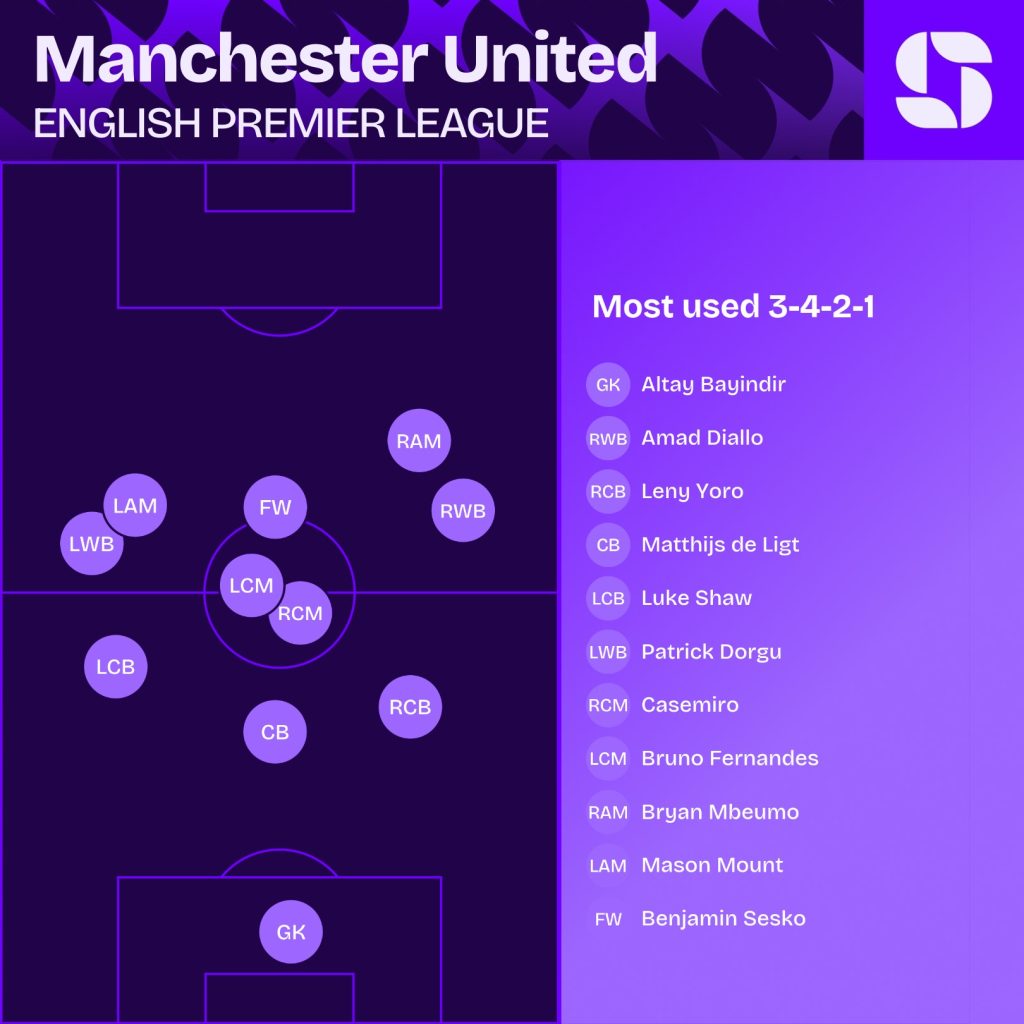
The main problem is coming from the team’s intentions, holding higher possession numbers while insisting to only go direct via formulaic routines. It means they rely on lots of lower-xG chances compared to fewer high-xG chances and pressing in a dysfunctional 5-2-3 shape off the ball.
One key principle this can all be attributed to is the player profiling. And, therefore, the coaching details Amorim is asking of these individuals, which is clearly not working.
Oliver Glasner principles
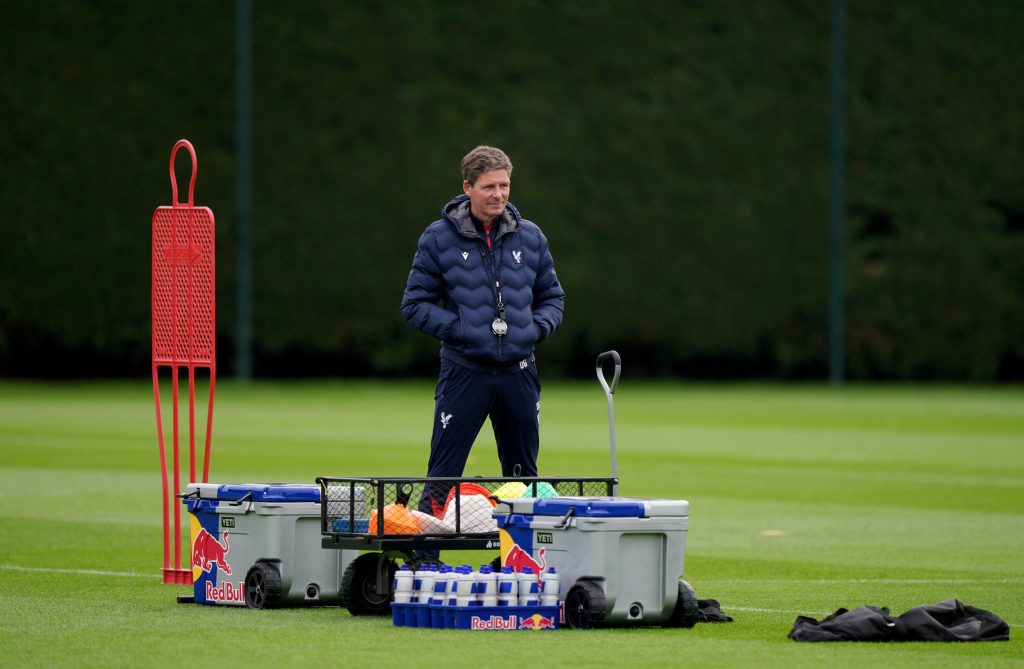
Oliver Glasner’s Crystal Palace are in sensational form, coming off the back of a successful 2024-25 season, winning the FA Cup. And they won the 2025-26 curtain-raiser, beating Liverpool in the Community Shield.
The Eagles have carried this momentum over into the new season. They’re the only side still unbeaten in the Premier League, with three wins and three draws from their six games. Palace sit third in the table, with 12 points.
Much like Amorim, Glasner sets his team up in a 3-4-2-1/3-4-3 shape. But the principles within that are drastically different.
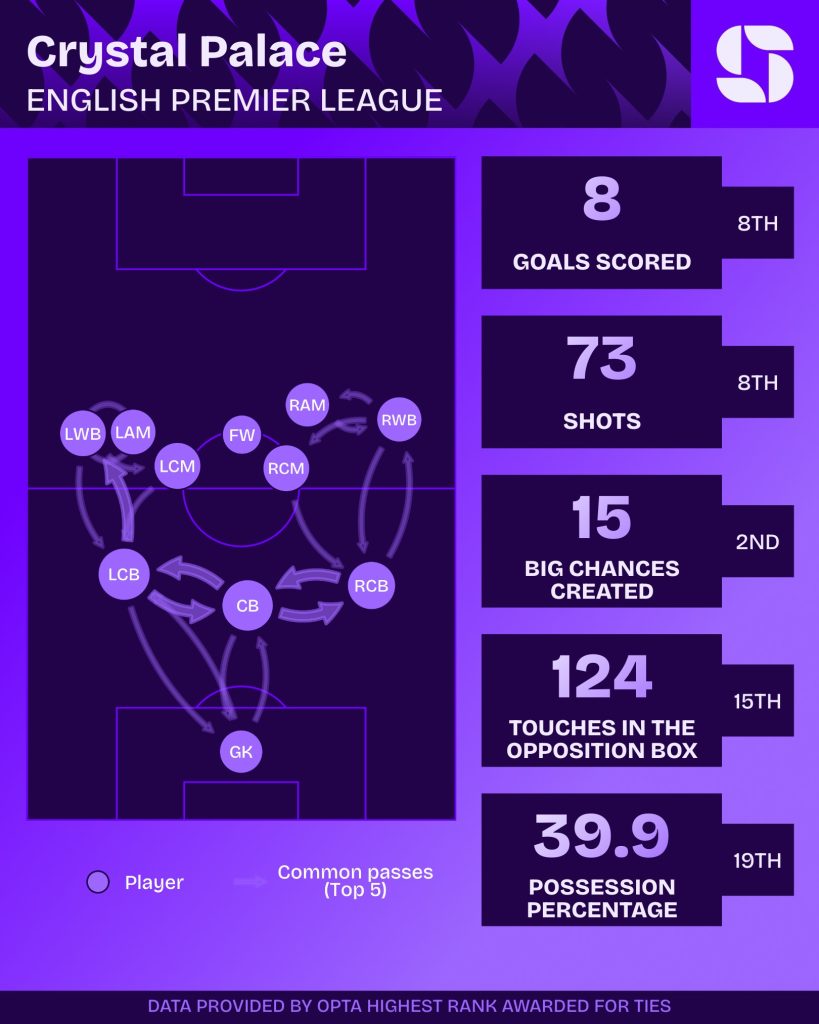
Palace are more flexible with their pressing structure, changing between a 5-2-3 and 5-4-1 dependent on the opposition. But they also press with less intensity in the first line, having the second-lowest passes per defensive action in the league (16.6), only behind West Ham United.
Glasner’s side are happy to allow the opposition to have the ball, shown by their 39.8% possession average (the second-lowest in the league). They sit in a solid midblock and wait for their chance to pounce on the counter.
Much like Amorim’s Man Utd, Glasner wants his side to be direct when going forward, looking for the best progressive routes to get them as close to goal in as few passes as possible.
But the key difference is the intent of both sides. While Palace are happy to absorb pressure and attack the space when they regain possession, Amorim wants his side to press aggressively and regain possession higher up. But it often leaves them with less space to exploit, even if their dysfunctional press does regain possession.
Player profiling
While Amorim has made it clear he will remain in his favoured 3-4-2-1 shape, Glasner has previously stated his teams are built with the players being the primary focus, a simple concept that Man Utd could benefit heavily from.
At Palace, Glasner has shown his ability to simply put his players in their best zones, maximising their output and usage on both sides of the ball.
Meanwhile, at Man Utd, you currently have Bruno Fernandes playing in a deeper midfield role, a mixture of wingers and full-back profiles carrying out wing-back roles and natural wingers often playing as inside forwards.
One area Glasner could massively improve this Man Utd team is by stripping things back to basics, looking to play to the squads instincts and getting their best players in position to succeed.
Short term vs long term
Now the interesting part of this debate comes when you begin to discuss whether Glasner is a short-term or long-term option for Man Utd.
Bringing in a manager who has succeeded with a game model having far less possession than most opposition and sitting in a solid midblock, begs the question of how transferable it would be for a team striving to be at the top end of the table.
However, with the situation of Man Utd right now, it feels very much like they need to stabilise first and start pushing back into European spots, before they can adjust and change their goals to aim higher.
Hiring Glasner could mean Man Utd have to make another change in a few years. But bringing in a manager that can maximise the talent of the squad he is given, change his system to cater the best players in their best zones and get stable results, could be exactly the step the Red Devils need to take in their journey back to the top.