







A big centre-forward is often a focal point for their team in football, bullying opposition defenders and scoring goals.
However, scoring goals doesn’t always have to be the primary focus of a striker. There are different ways to utilise their profiles effectively.
As defensive schemes get better and better, the tactical landscape is shifting towards baiting the press forward to create space between the opposition units, and centre-forwards can be key to unlocking space between the midfield and defensive unit.
In this article, we’ll cover
Diagonal and vertical affordances
The current tactical meta is shifting more and more towards central access, finding ways to enter the space between the defensive and midfield units in and around zone 14.
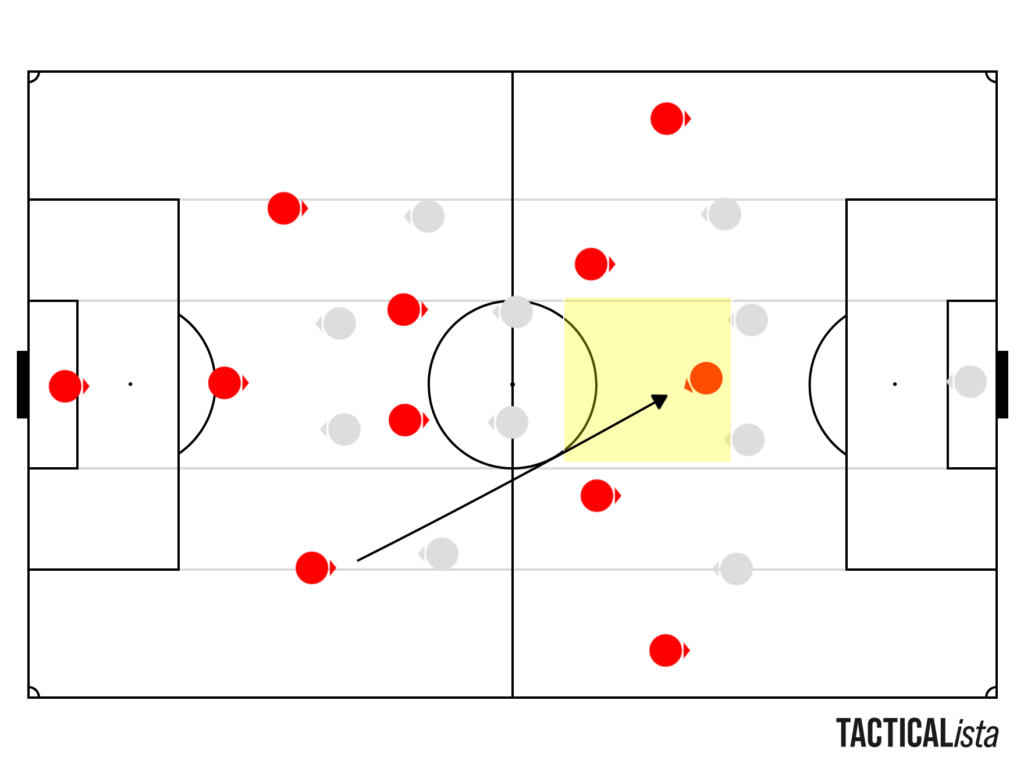
Having a centre-forward who is comfortable receiving the entry pass is an easy way to find access to this zone, as the pocket players can drag the midfield apart, opening the passing lane to find the centre-forwards feet.
This opens up a number of attacking possibilities, as it encourages central combinations with players playing off of the striker, while also testing the central defenders resolve on whether they jump out of the last line to follow the striker receiving the entry pass.
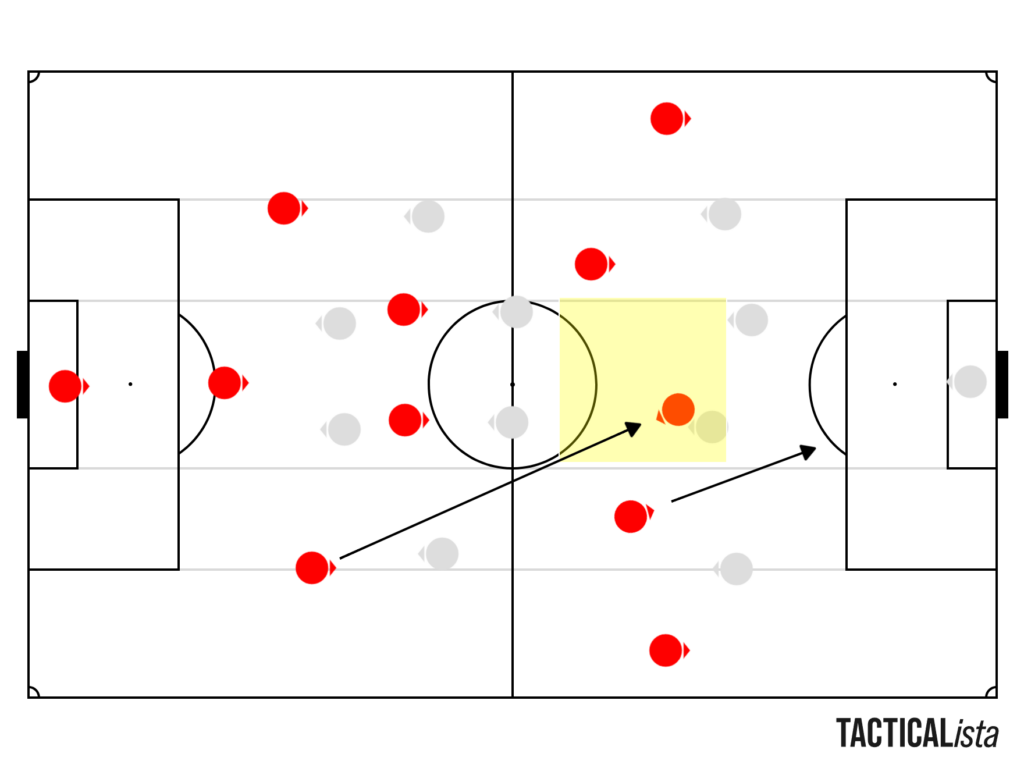
If the centre-back follows the striker, it opens up space behind the last line for somebody else to attack, whether that be one of the pocket players or a winger making an outside to inside run.
The striker’s playmaking abilities become key in accessing the runners, either combining in tight spaces to find the free man who can release the runner, or finding a solution themselves through creative thinking, clever flicks or turns to evade pressure and release the runner themselves.
Betfred - Get £50 in free bets when you bet £10
- Sign up at Betfred using this link or clicking the image below.
- Deposit a minimum of £10 and place a bet of £10+ on Sports.
- Receive £50 in Free Bets within 10 hours of bet settlement.

New customers only. Register, deposit with Debit Card, and place first bet £10+ at Evens (2.0)+ on Sports within 7 days to get 3 x £10 in Sports Free Bets & 2 x £10 in Acca Free Bets within 10 hours of settlement. 7-day expiry. Eligibility & payment exclusions apply. Full T&Cs apply.
Playmaking from the “post”
In basketball, many teams will put their center (traditionally the tallest/strongest player on the team) in the “post”, which is an area near the basket, typically inside the paint.
By “posting up”, the center will take up a position with their back to the basket, looking to receive the ball and find offensive solutions.
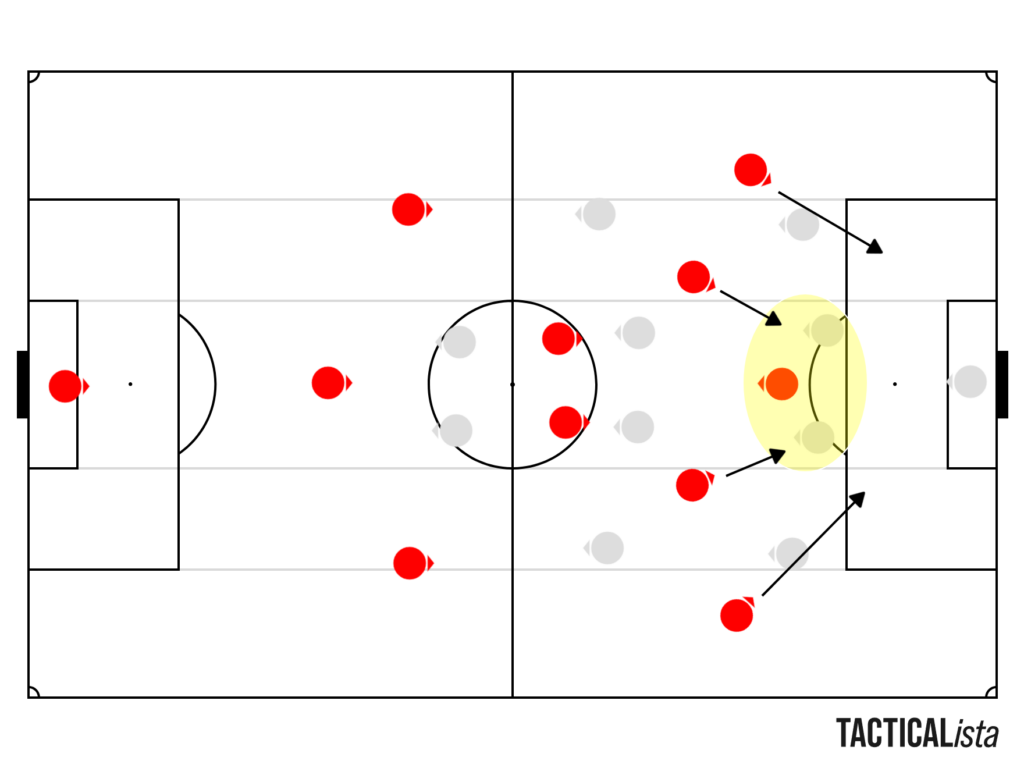
A similar thing can be said in football when the striker receives the ball with his back to goal, whether inside or outside the box.
Being able to playmake from this position is incredibly beneficial. The closer you are to goal, the more rushed and panicked the opposition defenders become. It often means multiple players are sucked towards the ball, leaving others free elsewhere.
Harry Kane example
Harry Kane is a brilliant example of a playmaking centre-forward who drops deep to receive the ball inside the opposition block, attracts multiple defenders towards him and releases runners in behind with his creative passing.
A combination of his quality first touch, ability to shield the ball and survey options and then make the correct decision is why Kane excels in this role.
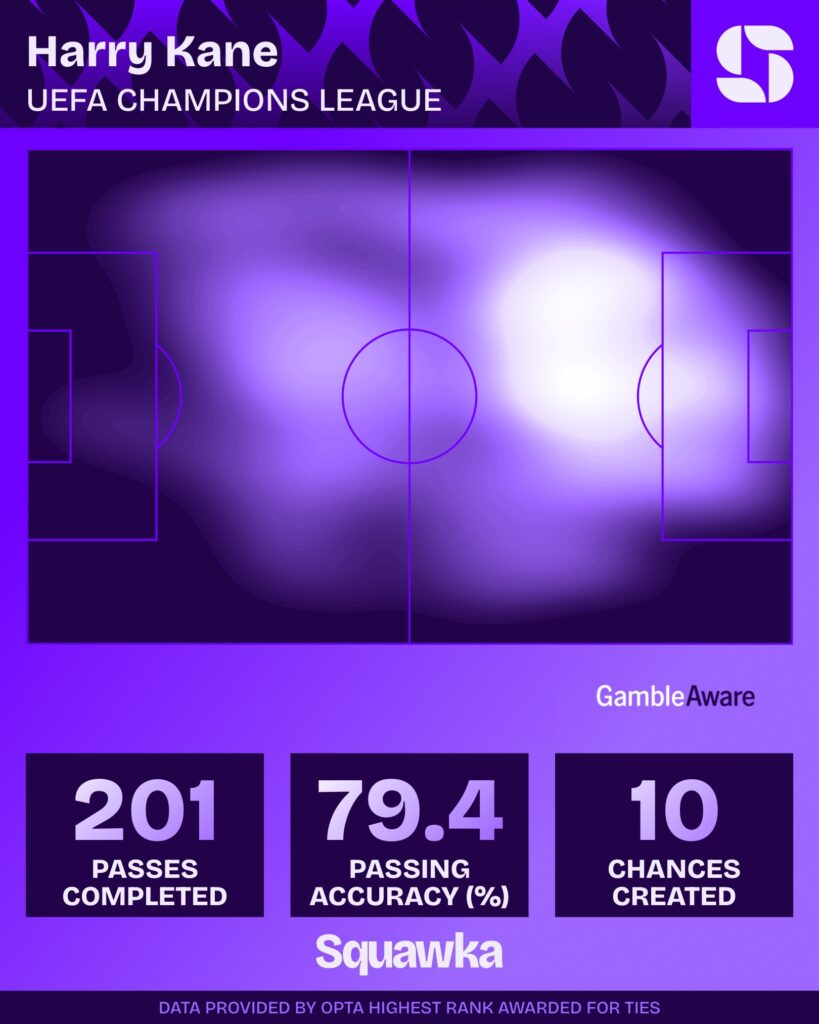
It also allows Kane to arrive late in the box, use his clever movement to find space and unleash his ball-striking, scoring goals for fun without having to bully defenders inside the box.
While Kane is the premium option right now, the next evolution of younger forwards coming through who have these No.10 on-ball qualities to create for others, are also coming in 6’4″+ frames, making their overall skill set even tougher to defend against.
Nick Woltemade and Fisnik Asllani
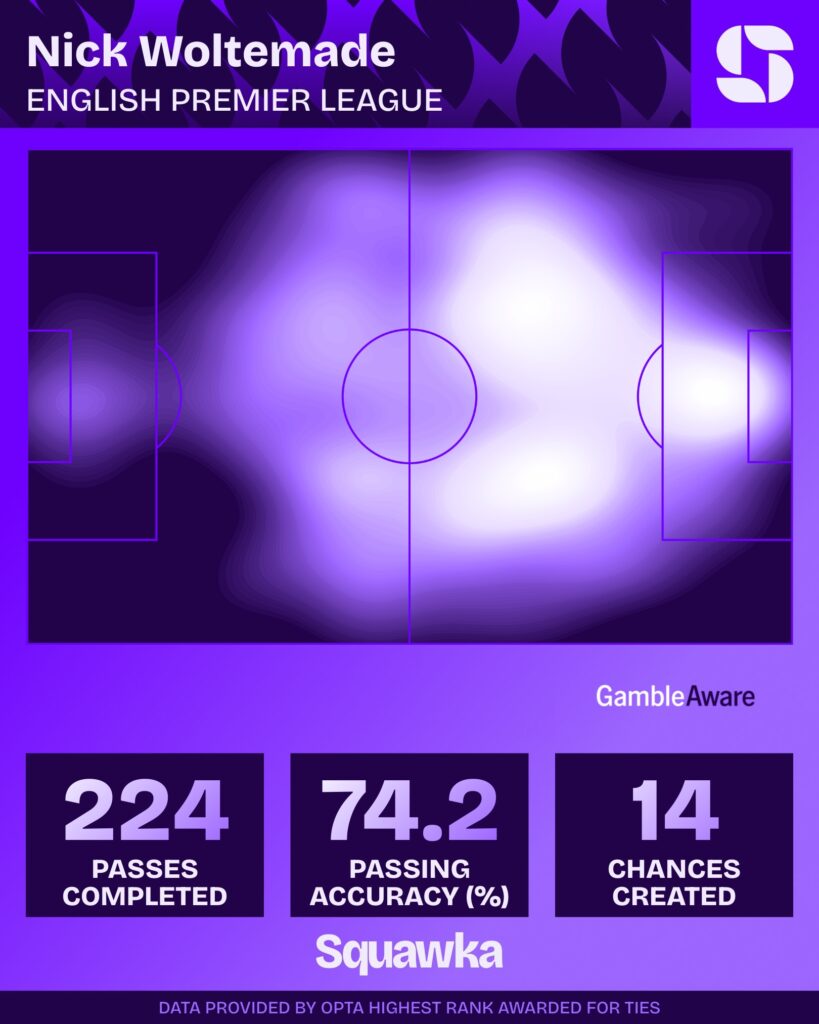
Newcastle United’s Nick Woltemade and Fisnik Asllani of Hoffenheim are two players who suit this role perfectly.
Woltemade hasn’t been used as effectively as he could’ve been under Eddie Howe at Newcastle. But glimpses earlier in the season showed his skill set and how the German could function as a creative No.9.
The 24-year-old has feather feet in tight spaces, often looking to receive the ball, take a higher volume of touches to attract players towards him and then find solutions to escape the pressure, opening space for Newcastle’s forwards who attack better with more open space.
Asllani has similar qualities. Despite playing mostly as a centre-forward, the 23-year-old has also shown his quality in a variety of positions for club and country including attacking midfield and wide areas.
The Kosovo international excels with his shadow play, combining in close proximity with his teammates and using flicks to release them into space he creates via his movements to drop deep/wide.
Asllani also has the ball-striking quality to arrive late and score goals as Kane does, making him a perfect archetype for this hybrid role as a playmaking centre-forward.