






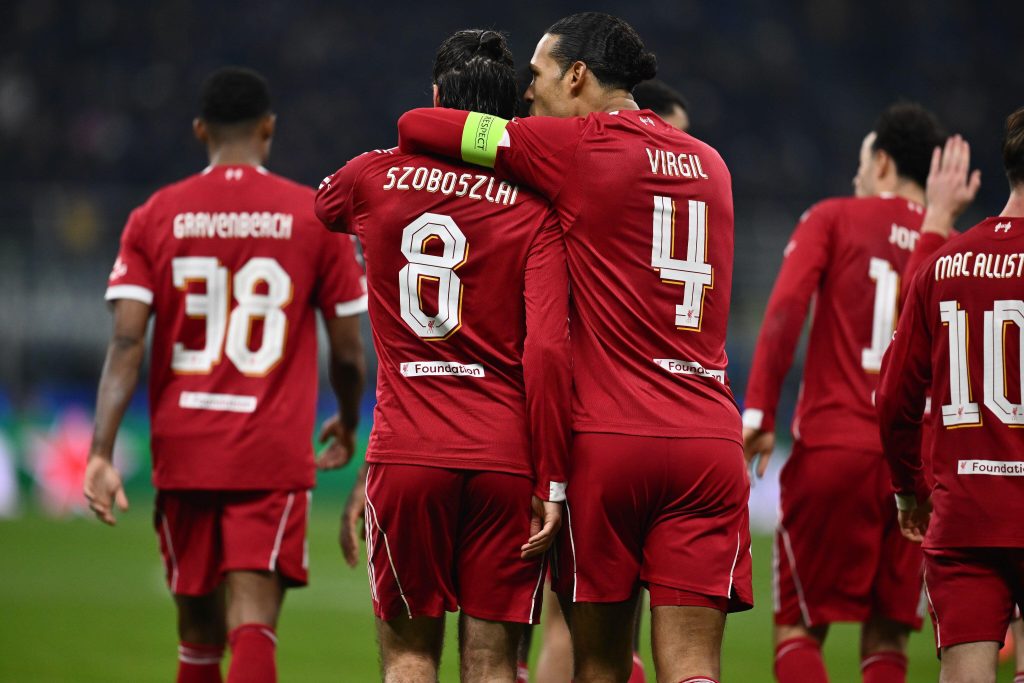
Liverpool got back to winning ways after back to back draws in the Premier League, beating Inter Milan 1-0 in the UEFA Champions League.
After a difficult week dealing with the Mohamed Salah interview coming off the back of a 3-3 draw with Leeds, Arne Slot had a tricky job ahead of him to stabilise things.
But with Cody Gakpo also out due to injury, Slot may have stumbled into a perfect scenario to begin building within a different system.
In this article, we’ll cover
New system?
With no natural wingers from the start, Liverpool lined up in a 4-1-2-1-2, playing a diamond in the midfield and two centre-forwards, allowing both Alexander Isak and Hugo Ekitike to start together.
Slot’s changes felt very much like he was trying to go back to basics, simplifying things, looking to win duels in the middle of the park and release the two forwards.
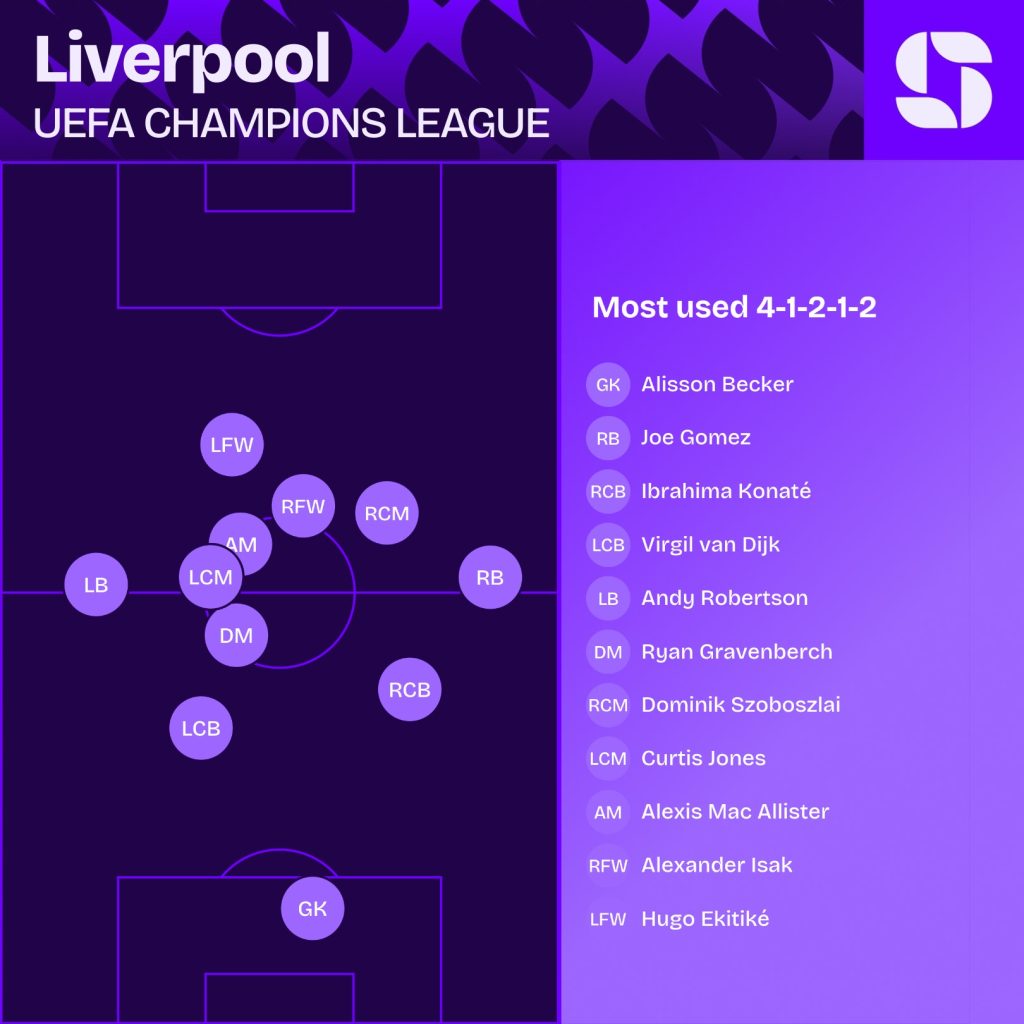
Against Inter Milan, Liverpool generated 1.47 expected goals from 12 shots in the match, creating two big chances and scoring one goal.
Slot pushed both of his full-backs high to provide the width, allowing his four central midfielders to rotate between themselves, dropping into the first line to help progress play and clustering in the centre to bounce passes.
But the two biggest areas affected by Slot’s tactical tweaks were two of the biggest issues in recent months, starting with the build up in the first phase.
Dabble sign-up offer: Bet £10+ & Receive £10 In Free Bets
Not signed up to Dabble yet? Here's how to claim the Bet £10+ & Receive £10 In Free Bets welcome offer:
- Sign up to Dabble through this link
- Register your account with accurate personal details
- Place your first bet of £10 or more
- Receive your £10 in free bets when your qualifying bet has setted
- Use your Free Bet on any eligible sportsbook market within 7 days

#AD 18+ 7-day free bet expiry. Stake not returned. Promotional Terms Apply. GambleAware.org
Build up improvements
In the first phase of build up, both Ibrahima Konate and Virgil van Dijk would split either side of Alisson Becker, forming a line of three at the back.
Both full-backs were instructed to push higher, providing the width and allowing the four midfielders to rotate between them to offer passing angles between the lines.
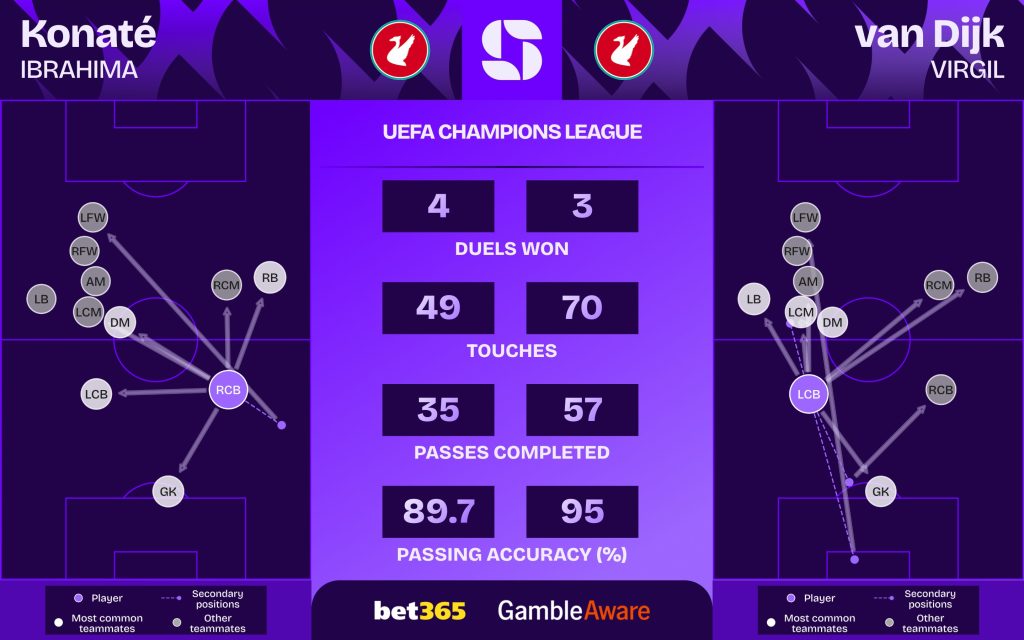
This gave Konate more time on the ball with Joe Gomez pushing ahead to clear the space in front of him, which saw the Frenchman begin to connect some long balls (completing five of his eight attempted).
By having the four midfielders and two full-backs pushed high, it also allowed Liverpool to go long at times, gaining territory by winning second balls around their two centre-forwards.
Passive press
The second aspect which was heavily impacted by the tactical tweaks from Slot was Liverpool’s press, as he deviated away from his usual 4-2-4 out of possession shape.
Liverpool only conceded 0.43 xG against Inter Milan, conceding nine shots and one big chance. In their last three or four games, they have taken a more passive approach to manage the space given up between their two lines of engagement.
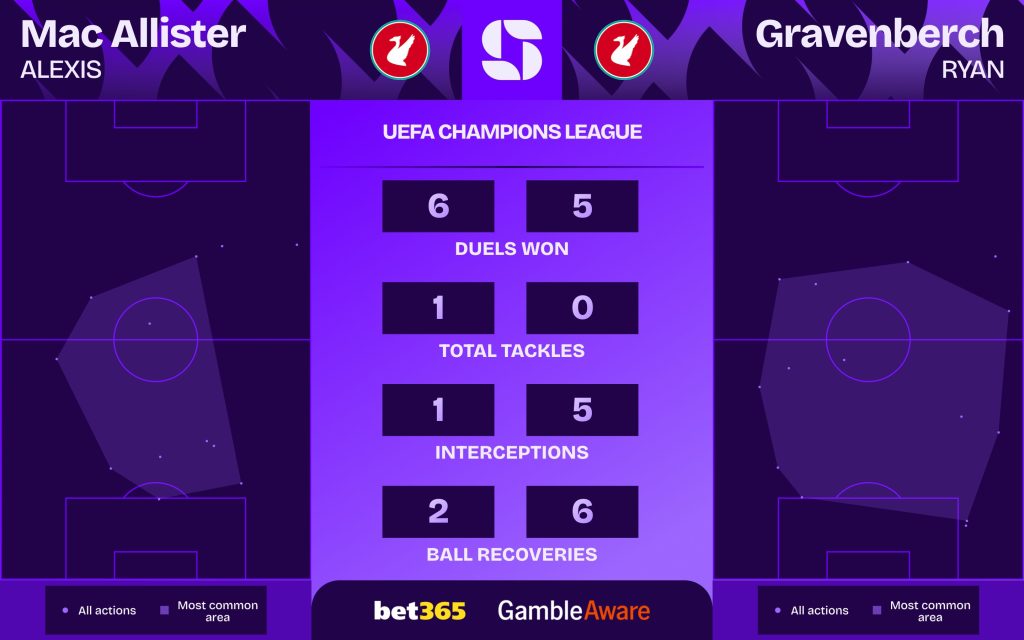
The change in shape saw Liverpool’s two strikers sitting wide to cover the two wide centre-backs of Inter Milan, with one of Alexis Mac Allister or Dominik Szoboszlai pressing as the centre-forward on the central centre-back.
Liverpool were looking to force the ball into the middle, where they had plenty of midfielders ready to compete in their duels, keeping things compact and looking to set those traps.
What’s next?
With Gakpo out injured for a few weeks and Salah going away for AFCON now after his recent public outburst, Slot will likely stick with something similar to what was seen against Inter Milan.
Florian Wirtz came from the bench to replace Isak, but the German could start in this system as the number 10, with three midfielders behind him.
Milos Kerkez and Jeremie Frimpong were two players who would suit these tactical tweaks, but neither featured in the game.
So going forward, Slot could hope for this system to revive their season, platforming some of his new signings better and looking to gather some momentum over the festive period.