






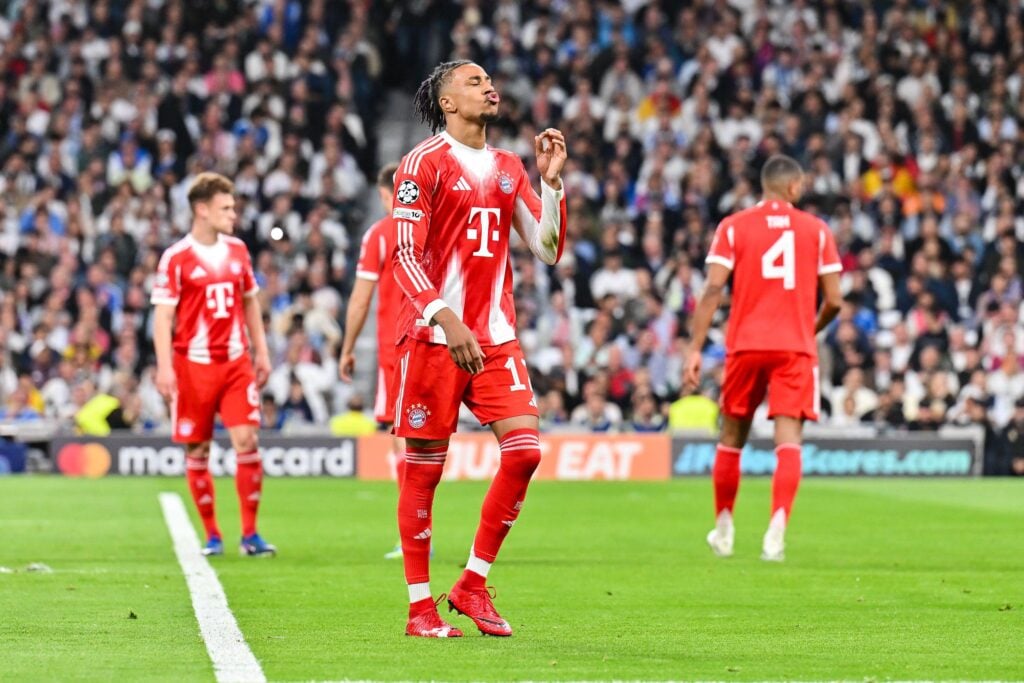
Bayern Munich beat Real Madrid 2-1 in the first leg of the Champions League quarter-final.
Both sides took 20 shots each, with Real Madrid generating 1.97 Expected Goals and creating four big chances. Bayern Munich created three big chances and generated 2.99 xG.
The visitors were 2-0 up just after half-time thanks to goals from Luis Diaz and Harry Kane, but second-half chances from Alvaro Arbeloa helped Real Madrid grab a goal back thruogh Kylian Mbappe.
In this article, we’ll cover
Bayern swarm Madrid
Vincent Kompany’s men managed to pin Real Madrid inside their own half for large periods of the first half, with Konrad Laimer and Josip Stanisic moving into the half spaces to pin Arda Guler and Fede Valverde narrow and deep.
This allowed Bayern to generate 1v1 wide isolations for both Michael Olise and Diaz against Trent Alexander-Arnold and Alvaro Carreras.
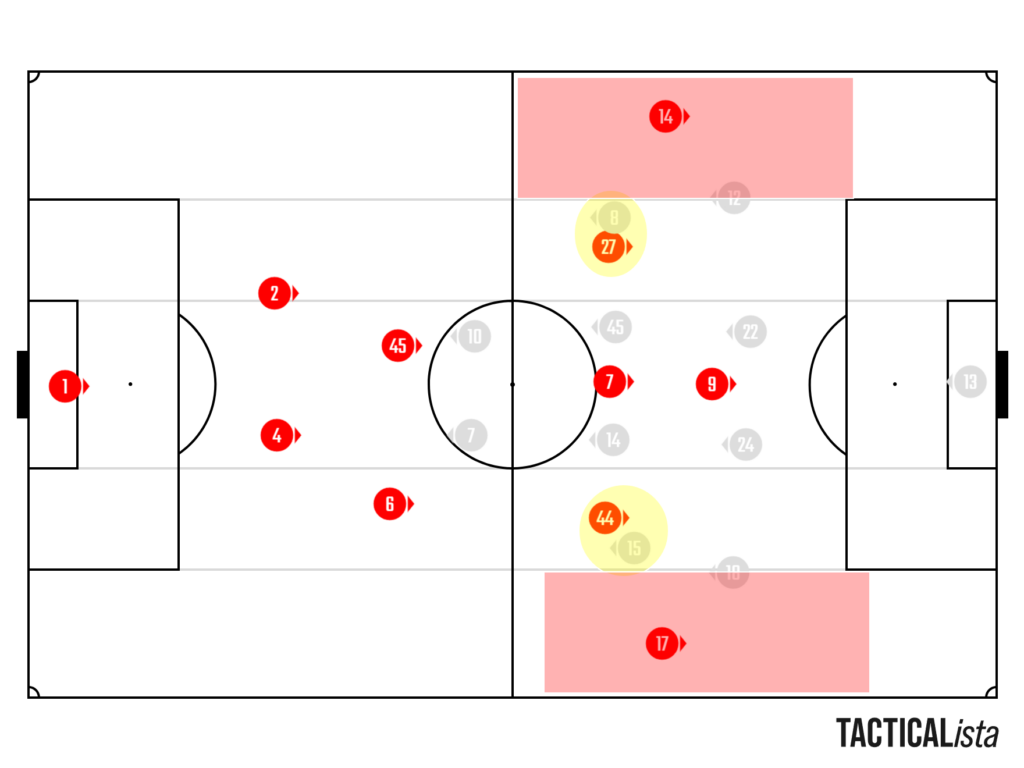
It also squeezed Real Madrid deep into their own half, which created a drift within their 4-4-2 block as Vinicius Junior and Mbappe looked to stay high and offer a counter attacking threat going the other way.
Bayern Munich could easily counter press if they did lose possession due to this drift between the Real Madrid units, helping them to sustain pressure and eventually find the breakthrough in the game.
Dabble sign-up offer: Bet £10+ & Receive £10 In Free Bets
Not signed up to Dabble yet? Here's how to claim the Bet £10+ & Receive £10 In Free Bets welcome offer:
- Sign up to Dabble through this link
- Register your account with accurate personal details
- Place your first bet of £10 or more
- Receive your £10 in free bets when your qualifying bet has setted
- Use your Free Bet on any eligible sportsbook market within 7 days

#AD 18+ 7-day free bet expiry. Stake not returned. Promotional Terms Apply. GambleAware.org
The Olise show
Olise was giving Carreras nightmares throughout the game, constantly finding those 1v1 isolations and looking to be positive, completing four of his seven dribbles in the match.
The Frenchman was direct in his approach, taking four shots in the game (two on target) and creating two chances, including the assist for Kane’s goal to make it 2-0.
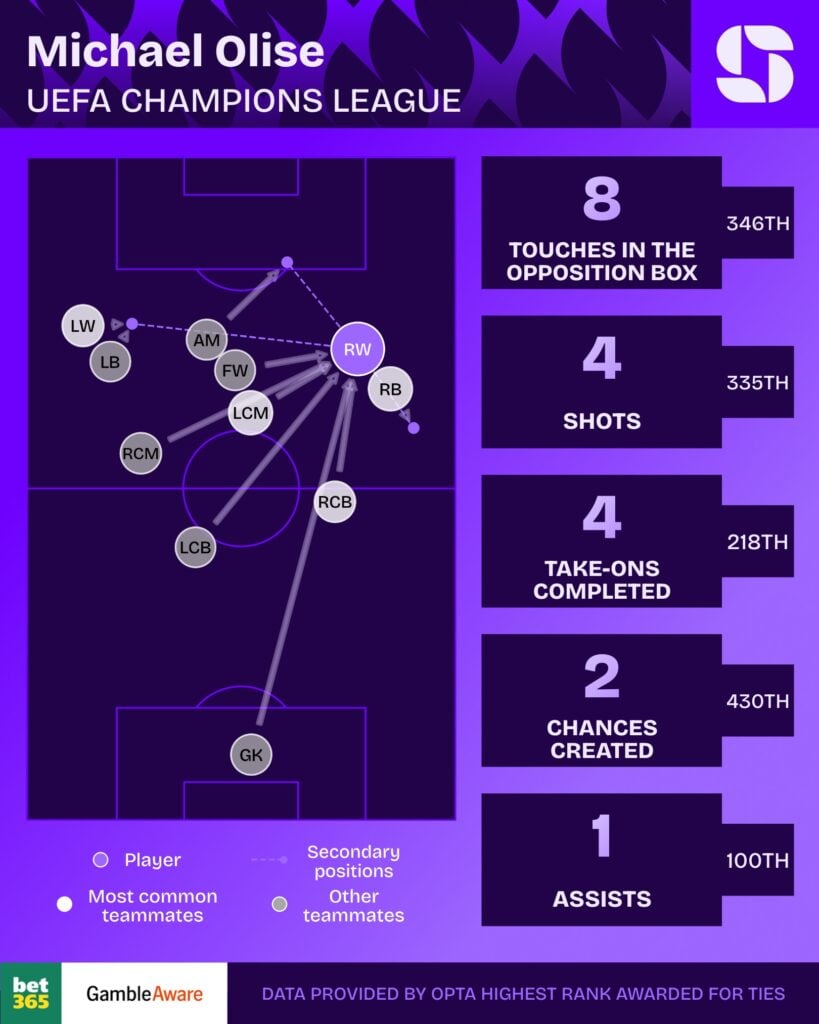
The variety in Olise’s game makes him such a threat, constantly changing direction and speed to manipulate defenders and put them on the back foot.
His decision making is also top tier, often making the right choice of pass, the right movements to receive the ball in space and taking shots of his own when the chance is there.
Madrid changes add dynamism
Bayern Munich were pressing aggressively in the first half, but after taking their two-goal lead, Real Madrid made a number of changes, which compounded with Bayern’s drop in intensity off the ball, allowed them to take more control in the game.
Eder Militao replaced Dean Huijsen, but the key changes came further forwards, as Jude Bellingham replaced Thiago Pitarch, before Brahim Diaz also replaced Guler 10 minutes later.
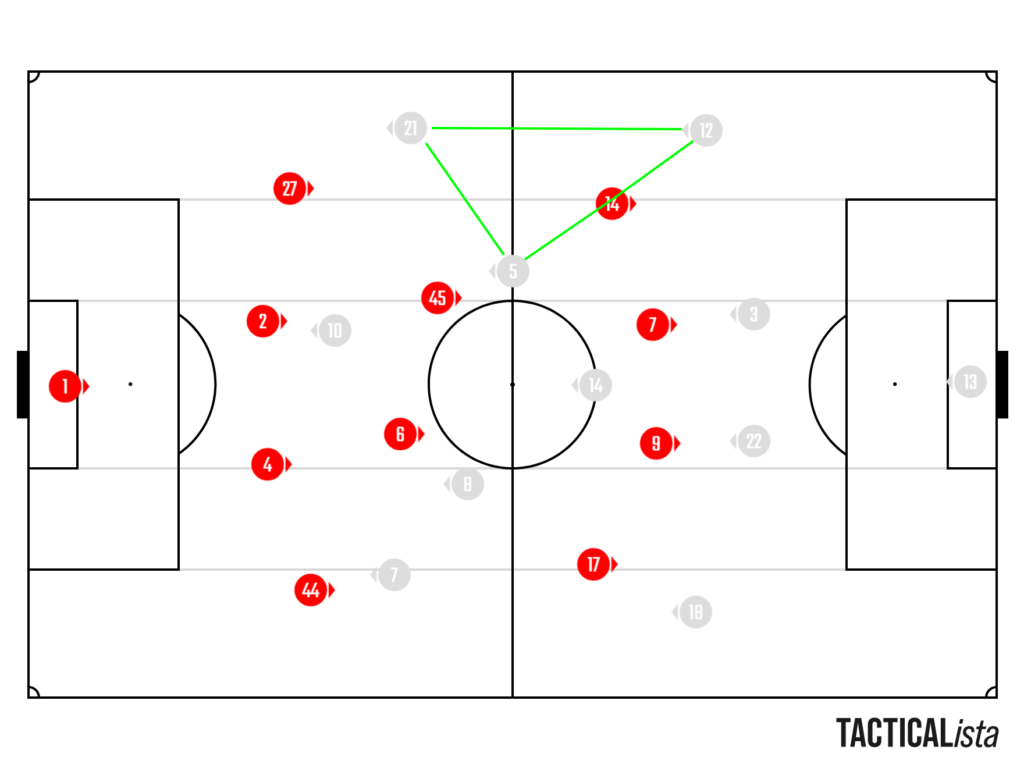
The dynamism this created in Real Madrid’s right-sided triangle allowed them to manipulate Bayern who were still defending in a relatively man to man fashion despite sitting deeper in their own half.
Mbappe’s goal came from a connection between Alexander-Arnold and Bellingham, which ended with a brilliant cross going across the box, Diaz attacking the penalty spot and Mbappe arriving at the back post to guide it home and make it 2-1.
Bayern’s attacking balance
There are four key components to Bayern Munich’s attacking setup, which consisted of Olise, Gnabry, Diaz and Kane.
Olise acts as the primary creator/playmaker for the team, getting into wide 1v1 isolations where he can manipulate the full-back, create separation and constantly look to find his teammates.
Gnabry plays in more of a free role as the No.10/shadow striker behind Kane, making runs beyond, drifting to either side to create overloads and dragging markers away from the middle.
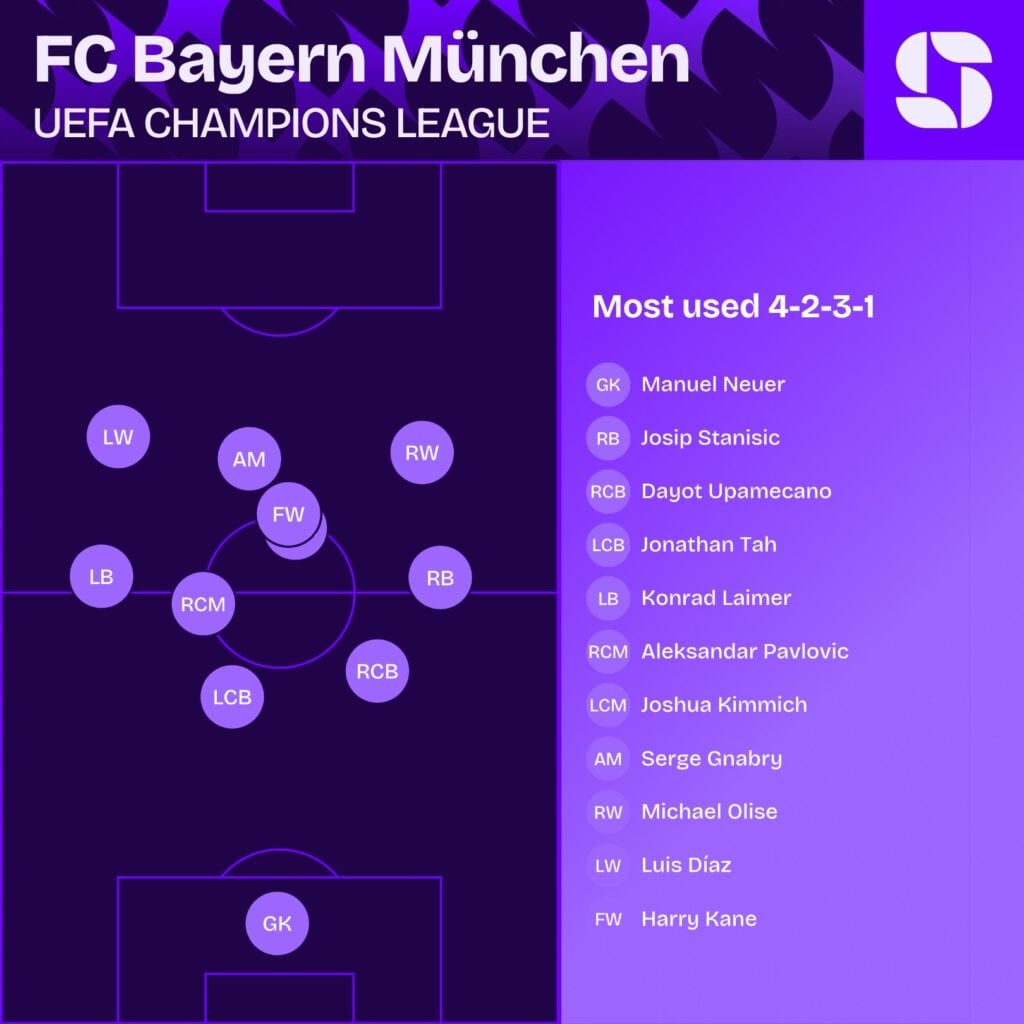
Diaz is the runner of the front four, constantly threatening with movements to go beyond and attack the space, which creates space for others between the lines and offers an outlet to find on the end of crosses/through balls.
And lastly, Kane can act as both a playmaking centre-forward or as a box striker, depending on the opposition and what the game needs.
Bayern Munich’s attack is perfectly balanced, showing how complementary profiles are key to an effective attack, rather than just throwing quality players together and hoping they can make it work.