






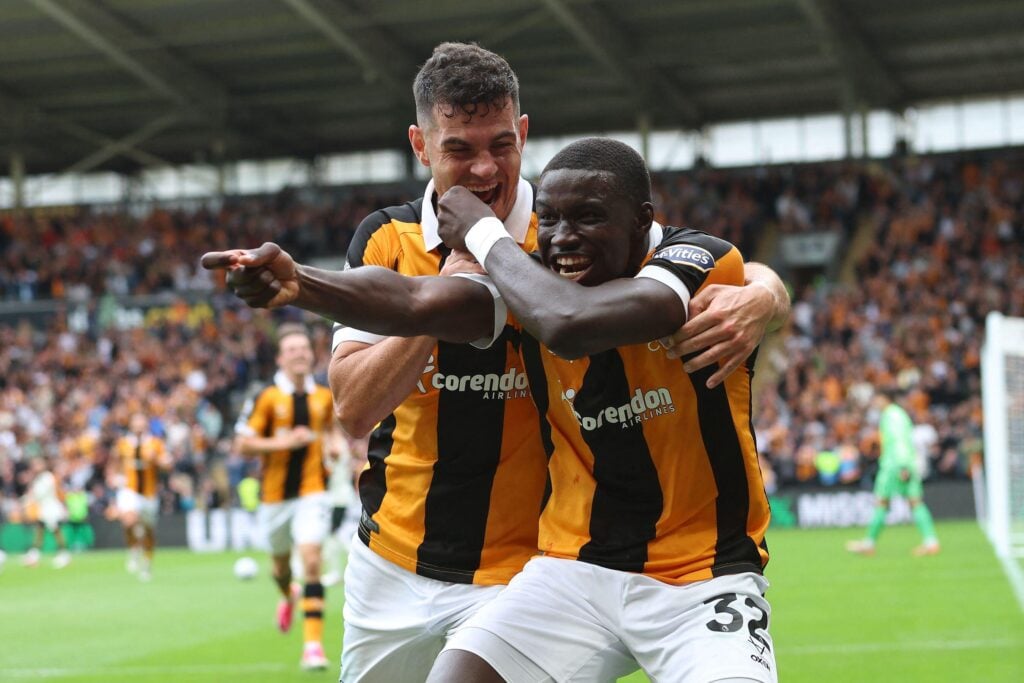
Hull City beat Man United rather comfortably in the opening weekend of the 2026/27 Premier League.
After Arsenal completely dominated Coventry City last night, many wondered what would happen to the Tigers, who also fielded many players who featured in the Championship promotion campaign, in their Premier League opener.
Of course, facing the Red Devils at home isn’t quite the same challenge than playing away to the reigning champions. But, in theory, still a tough task – that never really looked like it.
How did Hull City beat Man United?
Set pieces
Hull City were indeed superior to Man United today. But set pieces were ultimately the difference between them.
The Tigers accumulated 0.8 expected goals throughout the game. A whopping 90% of them originated from dead-ball situations.
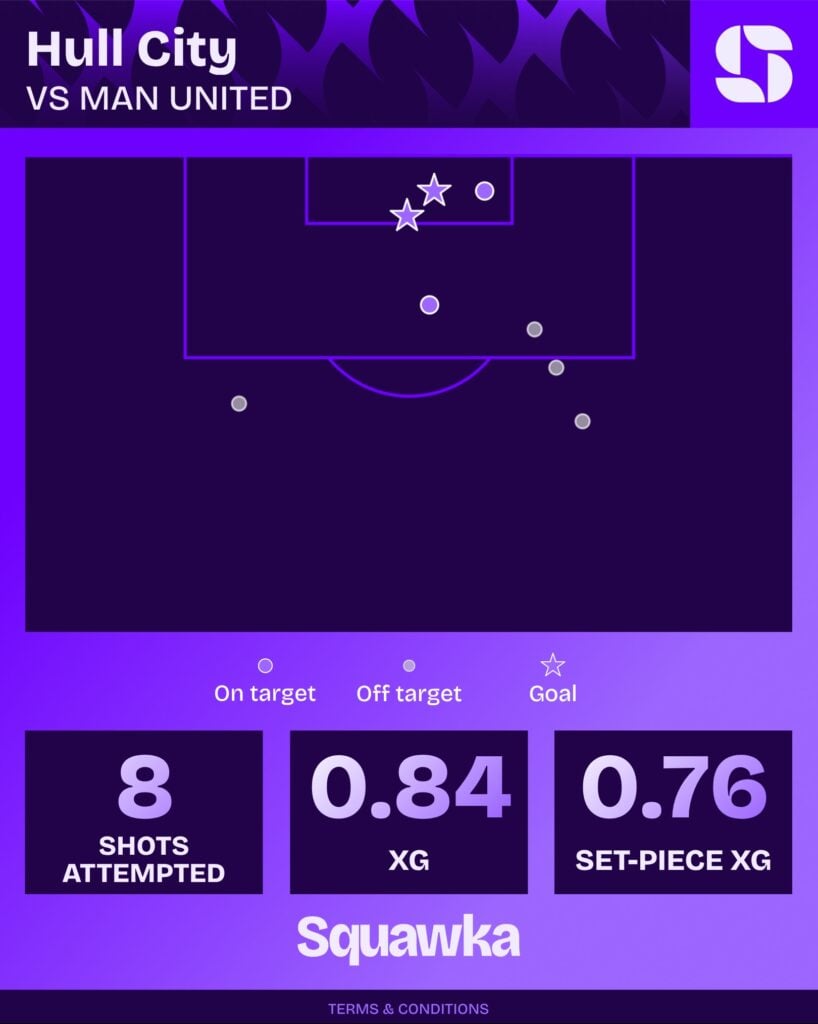
The first goal in particular illustrated well how far apart both teams were in terms of attacking and defending in set pieces.
Hull managed a flick-on in the near post, a great chance at the back post and the rebound off of it. Oli McBurnie would have scored in the second attempt if it wasn’t for Senne Lammens working a miracle. And they still got a third attempt immediately after it.
The second goal also showed a lot. Mendy headed it home but was almost glued to Ajayi. Both centre-backs left no gap for a United defender to position himself between them and possibly clear the ball out.
The Tigers left the Red Devils no hope in those scenarios, while also keeping themselves safe whenever crosses came their way. Which is actually a fitting segway into the next topic.
Michael Carrick’s strategies
Man United had two clear preferred ways of trying to hurt Hull City. Plan A was having runners in behind, whether it was Bryan Mbeumo, Patrick Dorgu or even Matheus Cunha who often dropped deep and Bruno Fernandes himself, who launched many of the over-the-top through balls.
This was a constant throughout the 90 minutes. Hull have always been a reactive side under Sergej Jakirovic, but they aren’t exactly great at defending. They also didn’t sit deep until they had a lead, so there was space for United to exploit. They just couldn’t connect most of the time – and when they did, Mbeumo had to shoot on his weaker right foot.

Plan B was crossing the ball over and over, mostly from the right-hand side. Which is ironic considering they completed more crosses from the left, despite the lower volume of attempts.
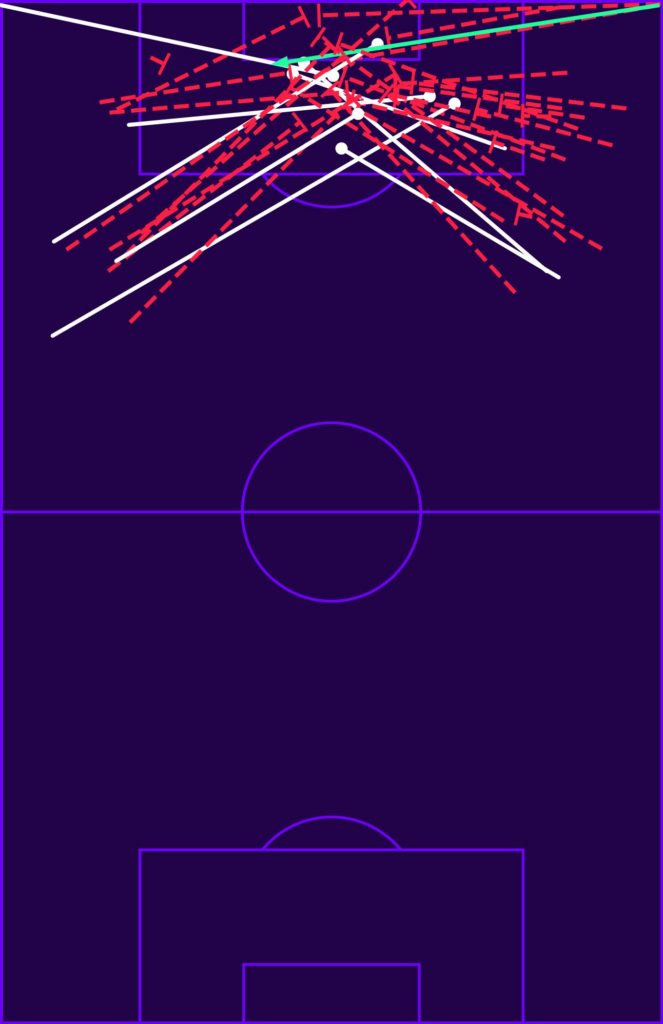
None of that truly worked, though. Opta did award a big chance for them following a Harry Maguire cross. But Dorgu barely touched the ball after arriving late at the far-post.
For perspective, Man United attempted a total of 39 crosses today against Hull City. That’s their highest tally in a Premier League game since October 2018 (44 vs Newcastle under Jose Mourinho).
Considering how soon they went for Plan B, it actually took Michael Carrick a lot of time to add Benjamin Sesko into the fray. The Slovenian striker only came on in the 67th minute.
The Red Devils did have a few decent moments playing in close proximity down the middle. But many of those sequences either featured or ended in Patrick Dorgu shots, which hampered their chances of scoring considering his poor performance.
Despite playing just the first 45 minutes, Dorgu led United in shot attempts (3). But that isn’t exactly a positive, considering he is the last player of their front line that Carrick and the fans will hope have the last touch.
Still too early to take big conclusions from this result. But it’s certainly three points that the most hopeful Hull City fans would not have accounted for. And also a missed opportunity for Man United who won’t have as easy a time as last season, given their participation in the Champions League.