








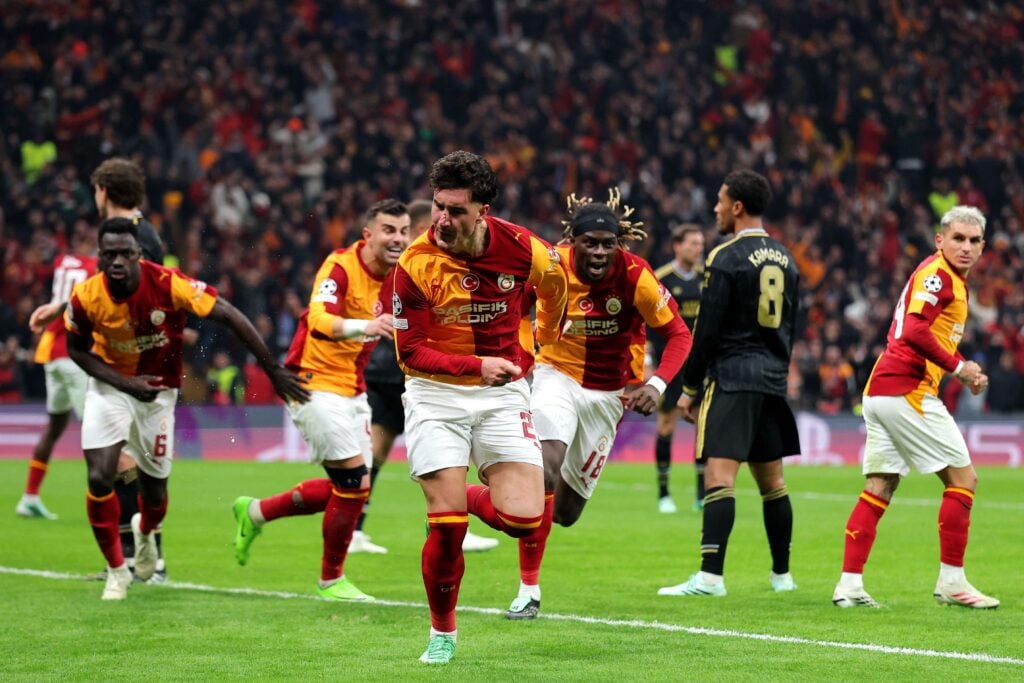
Galatasaray beat Aston Villa 1-0, putting themselves on nine points after five games in the Champions League group stage.
It was a dominant first half display from Unai Emery‘s side, having 55% of the ball and limiting Galatasaray to just one shot in the opening 45 minutes.
They themselves had a few half chances, only having three shots but generating 0.53 xG and one big chance.
However, after going in 0-0 at the break, Galatasaray came out with more fire in their bellies, fueled by a few early fouls which got the crowd riled up, leading to a swing in the games momentum.
In the 77th minute, Deniz Gul scored the only goal of the game, coming from the bench as a more natural centre-forward option to lead the line and heading it home from a corner to make it 1-0 and secure all three points for the Turkish side.
In this article, we’ll cover
Galatasaray’s press
Using the home crowd advantage, Galatasaray came ready to put Aston Villa under immense pressure.
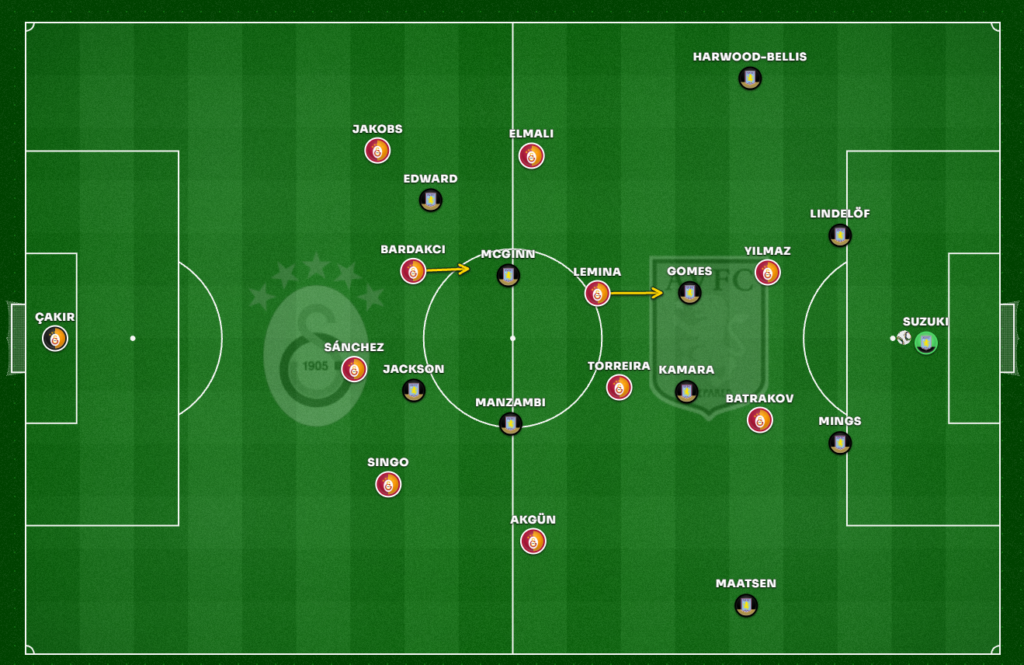
Baris Alper Yilmaz would join Aleksey Batrakov in the front two to apply pressure to the two centre-backs and goalkeeper of Villa.
The usage of the four behind them though was interesting, as Eren Elmali, Mario Lemina, Lucas Torreira and Yunus Akgun managed the Villa full-backs and the double pivot while trying to keep a +1 centrally to deal with Johan Manzambi and John McGinn between the lines.
Galatasaray did this in two ways, firstly, when Lemina did press up to join Torreira in pressing the Villa double pivot, the two wide men would drop deeper and narrow, while Abdulkerim Bardakci would step up onto McGinn so he wasn’t free between the lines.
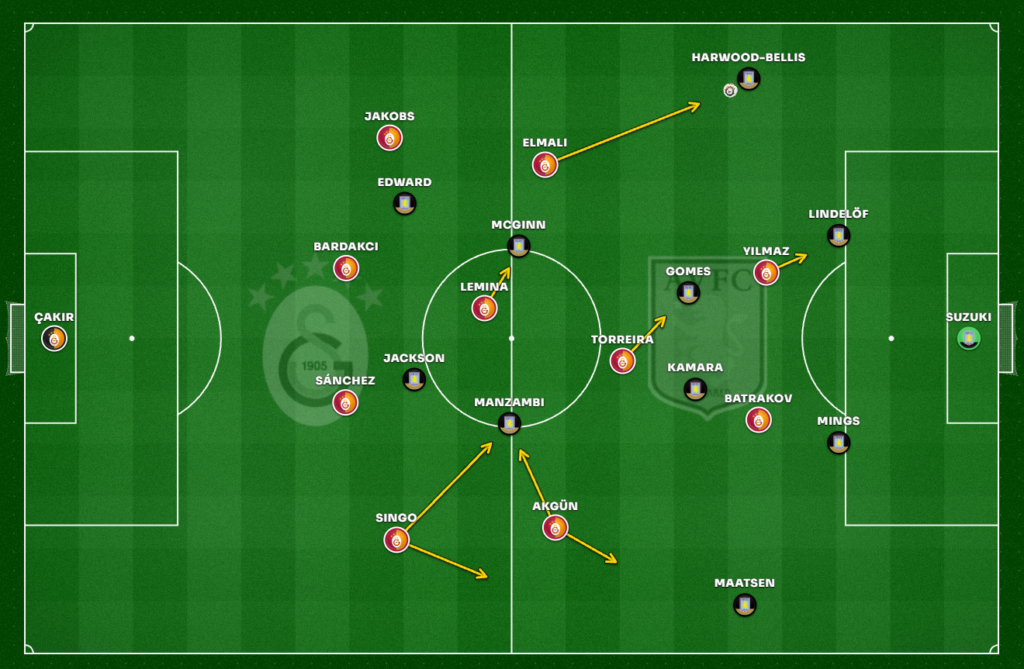
The wide midfielders were also responsible for noticing these moments to shuffle across and ensure Villa players weren’t free between the lines, with Akgun coming across to cover Manzambi at times for example.
Galatasaray would do this by having their ballside wide player applying pressure to the opposition full-back, with Lemina dropping to cover the near side pocket player, while the far side wide man (Akgun in the example above) would shuffle across.
They also dealt with this by having Wilfried Singo step up with Manzambi at times, with Akgun instead dropping and following Ian Maatsen on these occasions.
Villa deal with atmosphere
Emery’s side did brilliantly, especially in the first half, to deal with the atmosphere and the press of Galatasaray to get control of the game themselves.
There were a number of factors that helped them to do this, setting up in their usual 4-2-2-2 build up shape, with Manzambi coming inside from the left to join McGinn between the lines, while Alysson took up a more advanced role on the last line with Nicolas Jackson.
The composure started from the back, with Zion Suzuki looking as composed as ever, joining the two centre-backs to circulate possession and control the tempo of the build up.
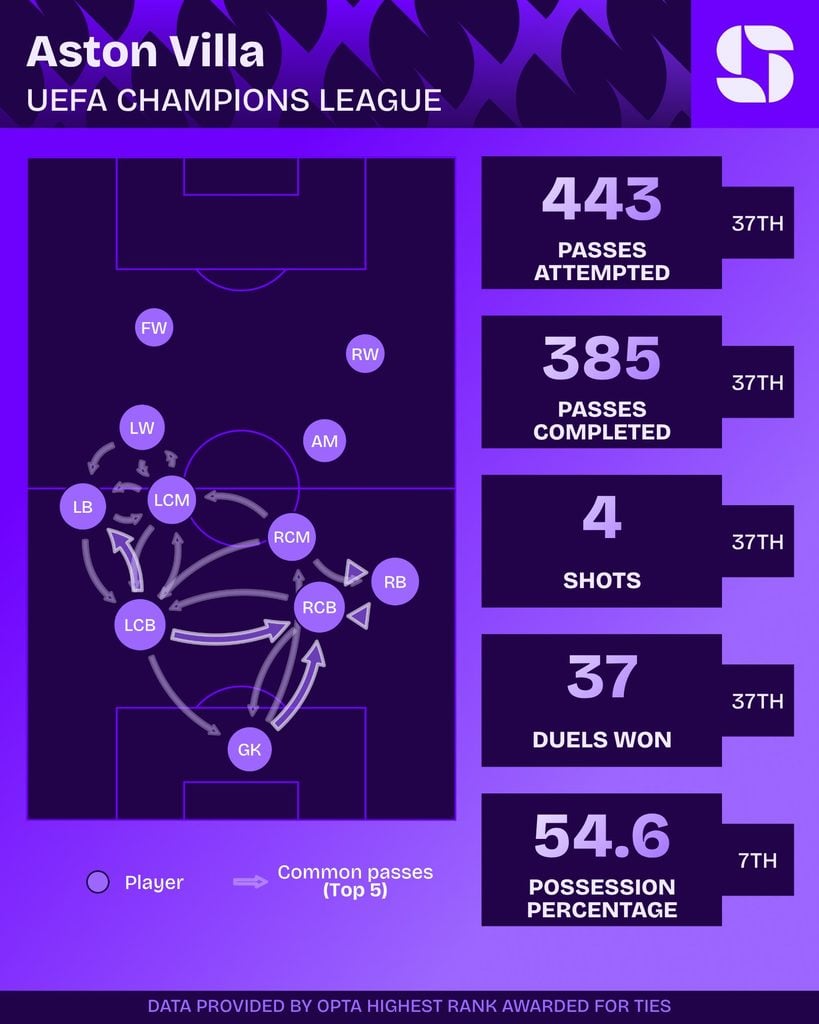
With Maatsen and Taylor Harwood-Bellis as the full-backs, naturally, Maatsen pushed higher on the left forcing Galatasaray slightly deeper on that side, while Harwood-Bellis stayed the more passive of the two, giving a natural balance to their play.
The press resistance and composure of the box midfield made up of Joao Gomes, Boubacar Kamara, McGinn and Manzambi was pivotal too.
Gomes and Kamara won four and three fouls each, taking the sting out of the game by baiting fouls when they couldn’t escape the press, but with Manzambi and McGinn constantly showing as options for the deeper midfielders, the four were able to stay composed and use each other to bounce passes and retain possession even when under intense pressure.
Emery’s diagonal plan
We saw a recurring pattern from Aston Villa against Galatasaray’s pressing scheme, as they tried to find diagonal entry passes into McGinn or Manzambi between the lines.
With Harwood-Bellis at right-back, he was often receiving in deeper wide areas with time to look for this pass as Elmali jumped towards him to apply pressure.
As Galatasaray shuffled across, the opportunity to find that diagonal entry pass into the centre was there, and Emery clearly saw this as a way of accelerating attacks.
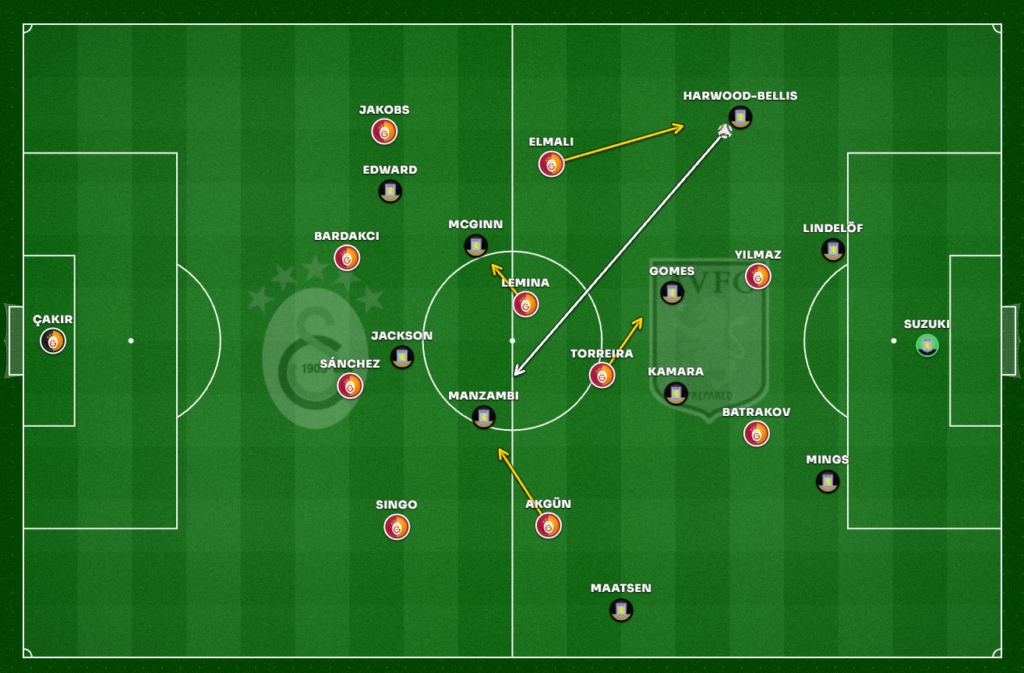
With the pass arriving diagonally to Manzambi for example, it was either Akgun having to arrive across from a right-midfield position or Singo having to jump out towards the Swiss international.
As he was receiving the ball at an angle, Manzambi was often able to receive with the pressure coming from his side, giving him better control of the duel and giving him a 360 degree perception of this situation, rather than a 180 degree perception if the pass was a more vertical one with his back to play.
While we didn’t see this pay off, the thinking to accelerate play with these passes was clear and with better decision making/execution, this could have been the difference in the game.
Galatasaray battle back
There was a turning point in the second half around the 52nd minute, where McGinn fouled Batrakov resulting in both players receiving a yellow card.
From this moment, the atmosphere began to reignite after slowly wearing away in the first half due to Villa’s clever approach.
Galatasaray flipped the momentum against Villa, getting themselves into dangerous positions, put them under pressure and eventually winning a set-piece which resulted in a goal from Gul who came from the bench.
While the Turkish side deserve credit for battling and fighting their way back into the game after a dominant first half display from Aston Villa, Emery may well wonder if McGinn’s foul ignited the flame which kickstarted their downfall.