






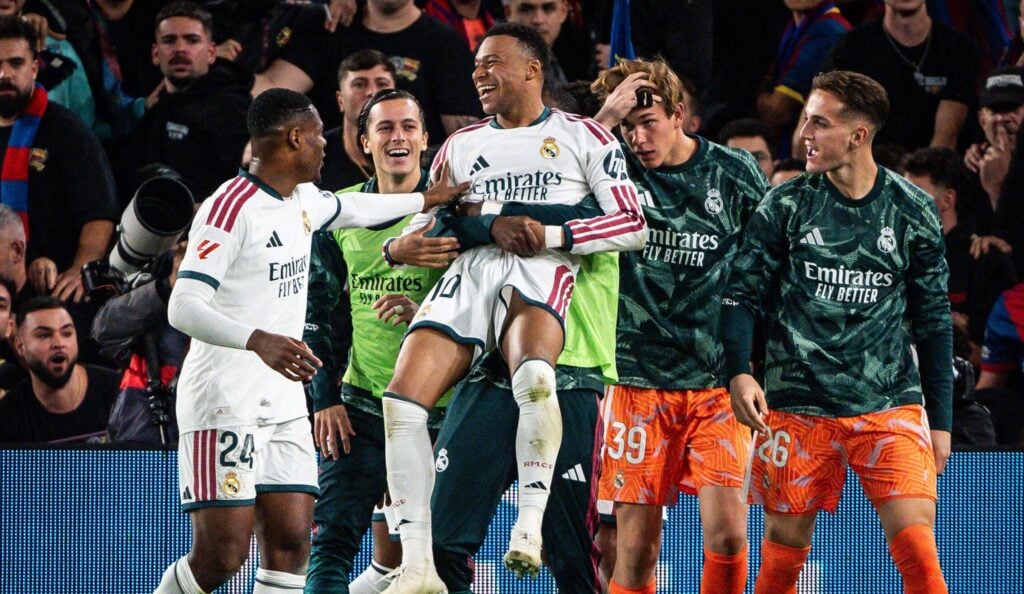
Barcelona lost their first LaLiga game of the season at the hands of Real Madrid in the El Clasico.
Kylian Mbappe bagged a brace as he reached 100 goals for Los Blancos, giving them a huge win at the Camp Nou. Raphinha scored an equaliser but it wasn’t enough to hold the draw or inspire a comeback victory.

Barcelona dominated possession like they usually do, spending 62% of the time with the ball. And they bettered their rivals in shots attempted as well, nearly doubling them in this regard (18-10).
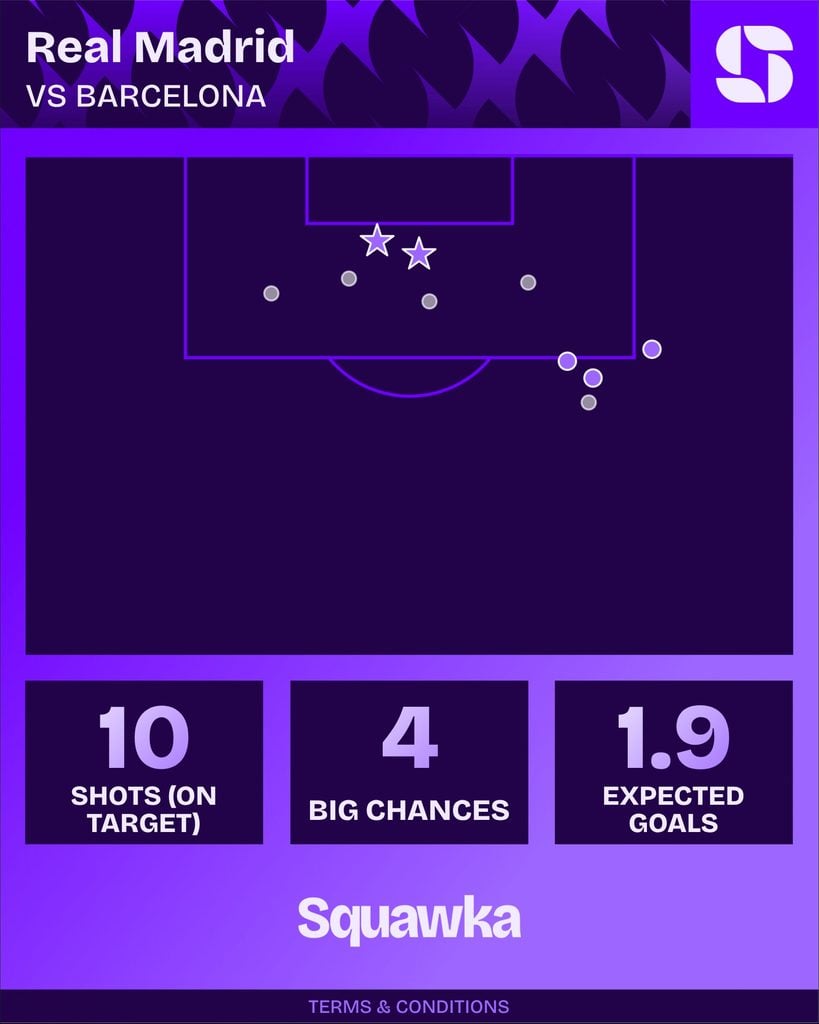
However, it was the visitors who doubled the hosts on big chances (4-2), also producing more expected goals (1.95 xG to 1.19 xG).
And Barca showed a rather pragmatic version of themselves tonight. Hansi Flick is high on pressing and counter-pressing, but often chose not to match Real Madrid’s numbers in build-up, instead leaving a spare man at the back.
Madrid pressed less often, but when they did they made sure to go all-in, creating 11 different mini 1v1 duels and centre-backs chasing opposing forwards wherever they went.
How did Real Madrid hurt Barcelona?
Constant switches of play
Real Madrid targeted mostly the left flank to get their attacking game going against Barcelona. With Vinicius Junior suspended, Yan Diomande carried most of the load – and even led his side in touches tonight (66).
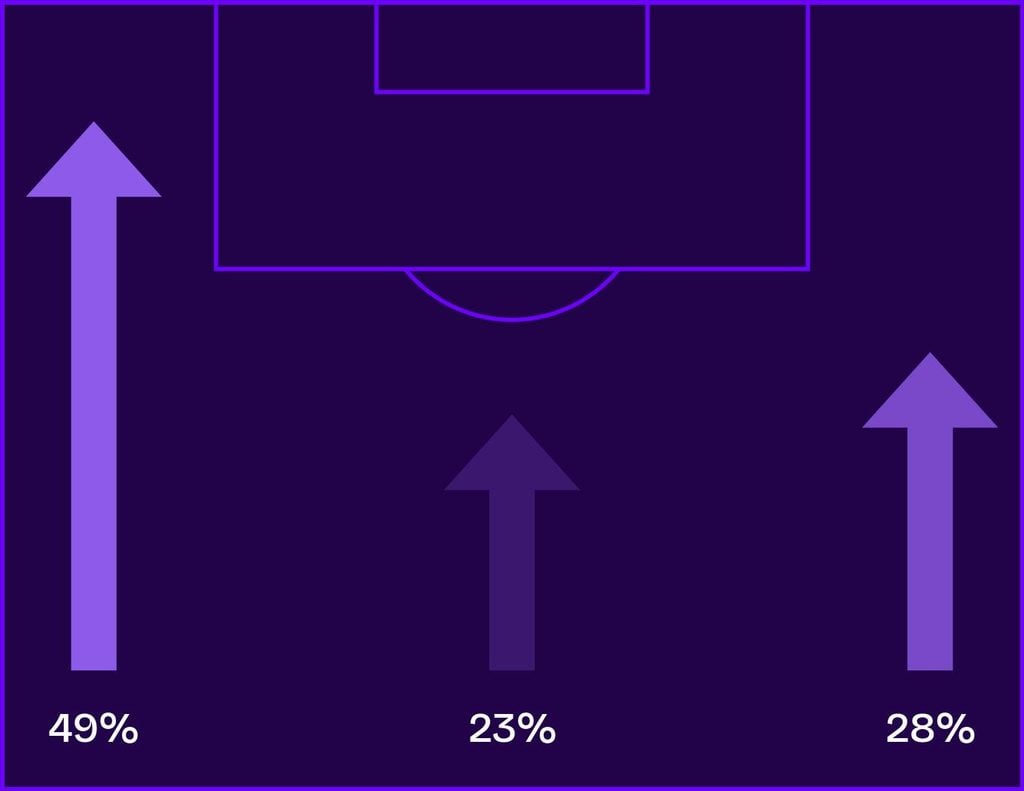
Jose Mourinho had a clear plan A to exploit Barca’s – very much real – defensive weaknesses. Flick’s defensive block was extremely narrow most times, looking to trap Madrid in the side they were playing.
Real welcomed that approach and quickly tried switching the play to the other side. The most frequent action, especially in the first half, was going from right to left and then back to the right.
They found it relatively easy to break Barcelona’s press and find Diomande isolated on the wing, with Federico Valverde in particular playing those long, diagonal passes.
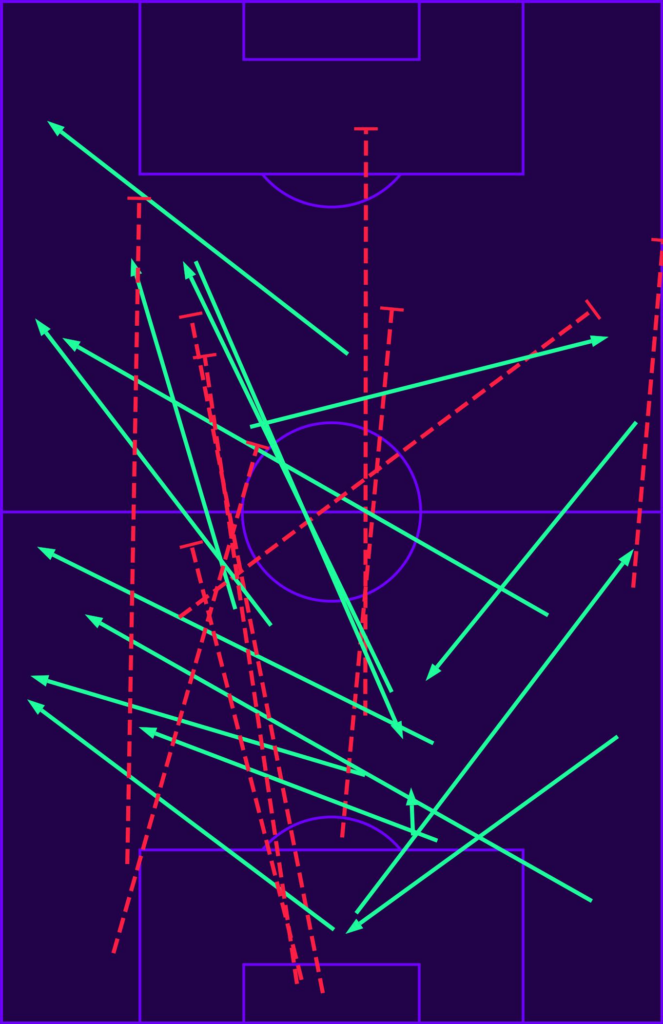
The initial idea was to then go back to the right, where Arda Guler would have more space to cut inside and shoot. It wasn’t a coincidence that of Madrid’s 10 shots in the game, half of them were by the Turkish midfielder (5).
Marc Cucurella‘s perception of this scenario was key for Real Madrid opening the scoring. It was a rather lucky goal, with Mbappe blocking a clearance rather than actually attempting a shot. But the lead-up to it was no accident.
The Spanish left-back started pushing up the pitch as the first half went on. He knew that Barcelona would try to trap Real Madrid on the right and have space to receive on the left, as Diomande was doing all game long. And he also knew that Lamine Yamal would not track his runs.
As a result, Diomande tucked inside to keep Joao Cancelo busy, giving Cucurella a lot of room to operate in the flank. Bernardo Silva recognised the eventual 2-on-1 that scenario would lead to and played a beautiful diagonal ball – the rest is history.
Transitions
Real Madrid did a great job keeping the game even in the first half. Barcelona still had more possession before the break (59% to 41%), but there were brief stretches in which Los Blancos dominated the ball. They were key to not let the hosts get into their rhythm.
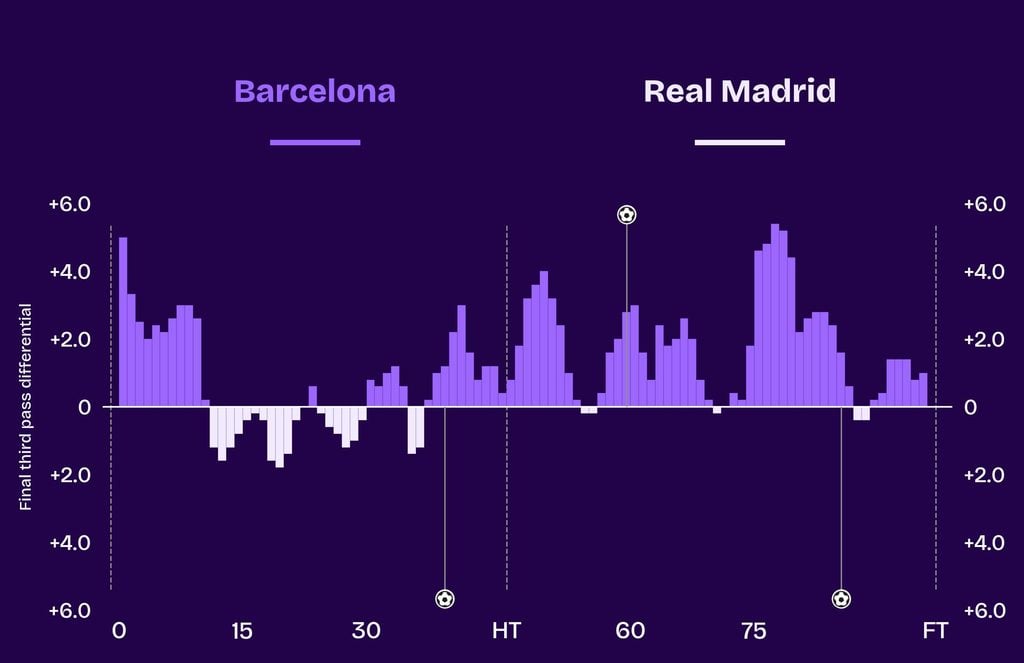
In the second half, none of this happened and Mourinho leaned completely on fast breaks.
| Real Madrid stats | 1st half | 2nd half |
|---|---|---|
| Counter-attacking sequences | 6 | 9 |
| Average sequence time | 10.4s | 6.6s |
| 10+ pass sequences | 5 | 2 |
It made it easier for Barcelona to force them back and be more dominant with the ball. Hansi Flick also made a few changes to his in-possession structure, going away from the usual 3-2-5/3-1-6 and often leaving just the two centre-backs behind. Both Cancelo and Alejandro Balde started going forward at the same time, adding more bodies in the attacking half.
But Real Madrid stuck to their game plan. Bellingham himself had two great opportunities to find Mbappe running free towards goal, but failed in the decision-making department in the first and in the execution department in the second.
The Englishman, as always, was very willful at the back, but got nearly everything wrong with the ball. But the one time he got it right, it was a beautiful sequence in reduced space that allowed Eduardo Camavinga to find Guler in the right touchline and receive it in front before setting up Mbappe for the winner.
And it was a late fast break that ultimately won Real Madrid the game, rewarding their persistance in the strategy Mourinho had lined up for the second half.