






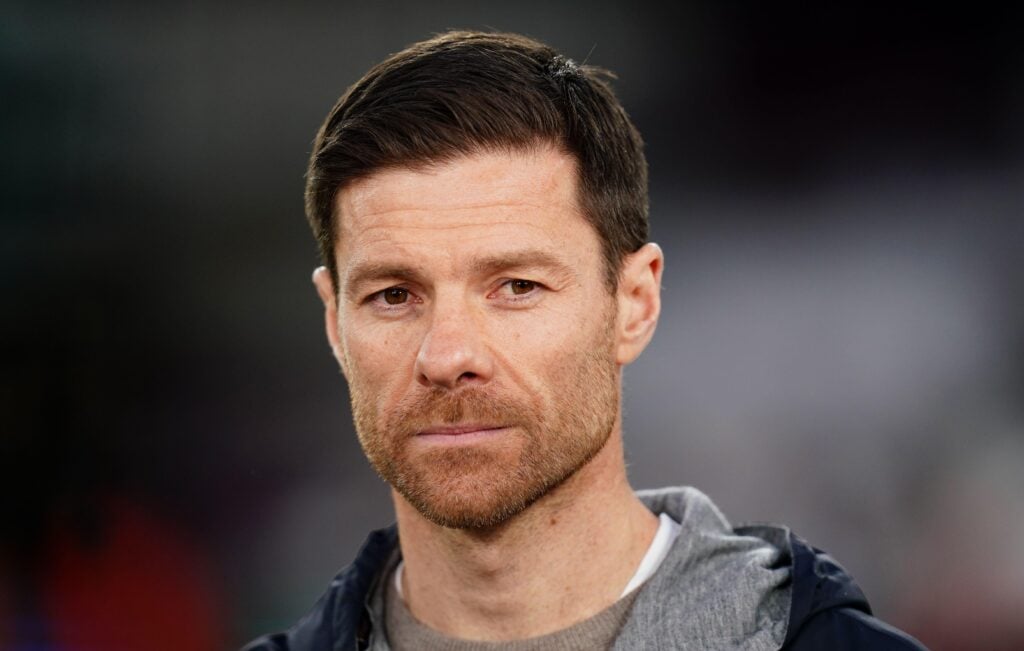
Xabi Alonso has been named as the new Chelsea manager.
The Spaniard is set to be given more control than any other coach hired under the new ownership, with the club looking to adjust their strategy this summer.
Chelsea finished 10th in the Premier League this season, missing out on Champions League football for the third time in four years under the new ownership. They also missed out on European football altogether for the second season in their four-year period.
The Blues are estimated to have spent around £1.8billion since the takeover in 2022, with their transfer model focused on building a young and exciting squad for the future. All while still looking to compete in the present.
But, after an extremely poor season following their Club World Cup success last summer, the Chelsea hierarchy will reportedly look to rethink their strategy. The club are reportedly open to adding some top-quality players to their young core, adding extra experience and leadership to help harness the youthful squad.
Alonso has plenty of work on his hands. But there are four key areas he will be looking to address this summer and next season, in order to get Chelsea back on track.
Four changes Xabi Alonso needs to make at Chelsea
Defensive stability
Alonso’s first job will be to solidify things defensively at the club. Since Enzo Maresca departed at the start of 2026, Chelsea’s defensive numbers have dropped off.
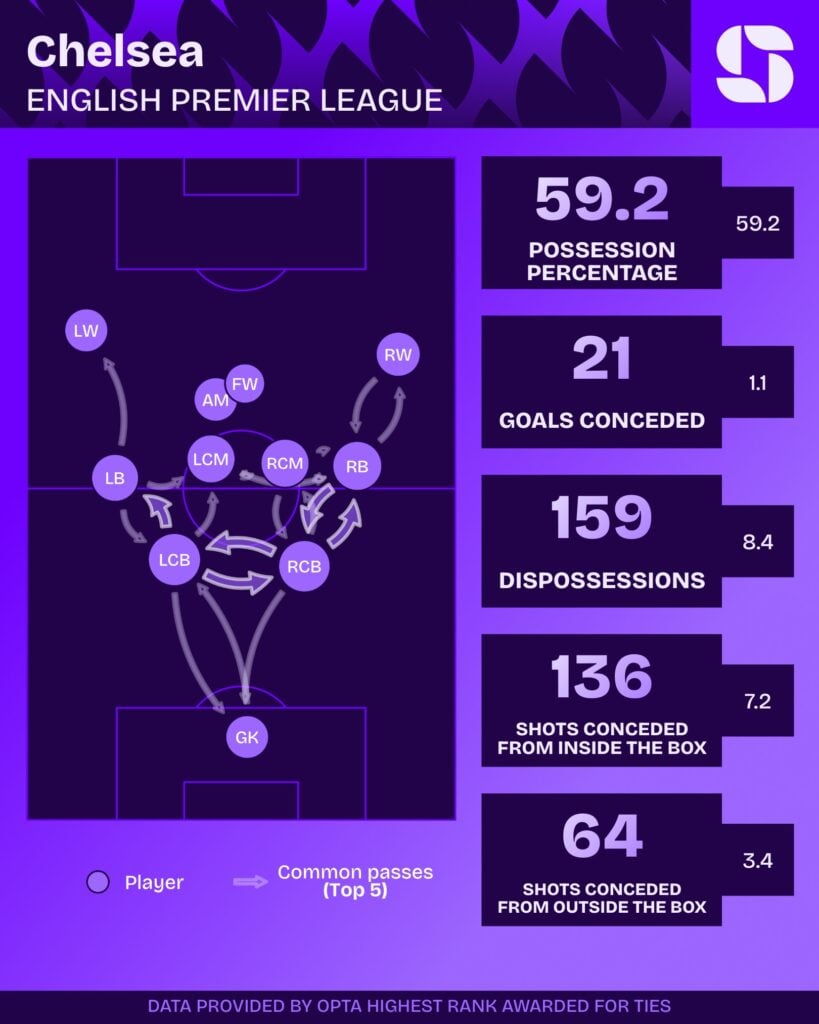
Maresca’s Chelsea understood their strengths and weaknesses. They controlled the ball at a slower tempo in order to control the game, limiting their defensive work inside their own half and keeping their units close together to defend the space.
When the Blues did lose possession, they had a good counter-pressing net/rest defence around the ball, leading to a stronger defensive record.
Liam Rosenior’s arrival saw these factors exposed more with his principles of play. The Blues often looked to attack quickly through the middle of the pitch, with their units being stretched. More games became back and forth, a chaotic mess.
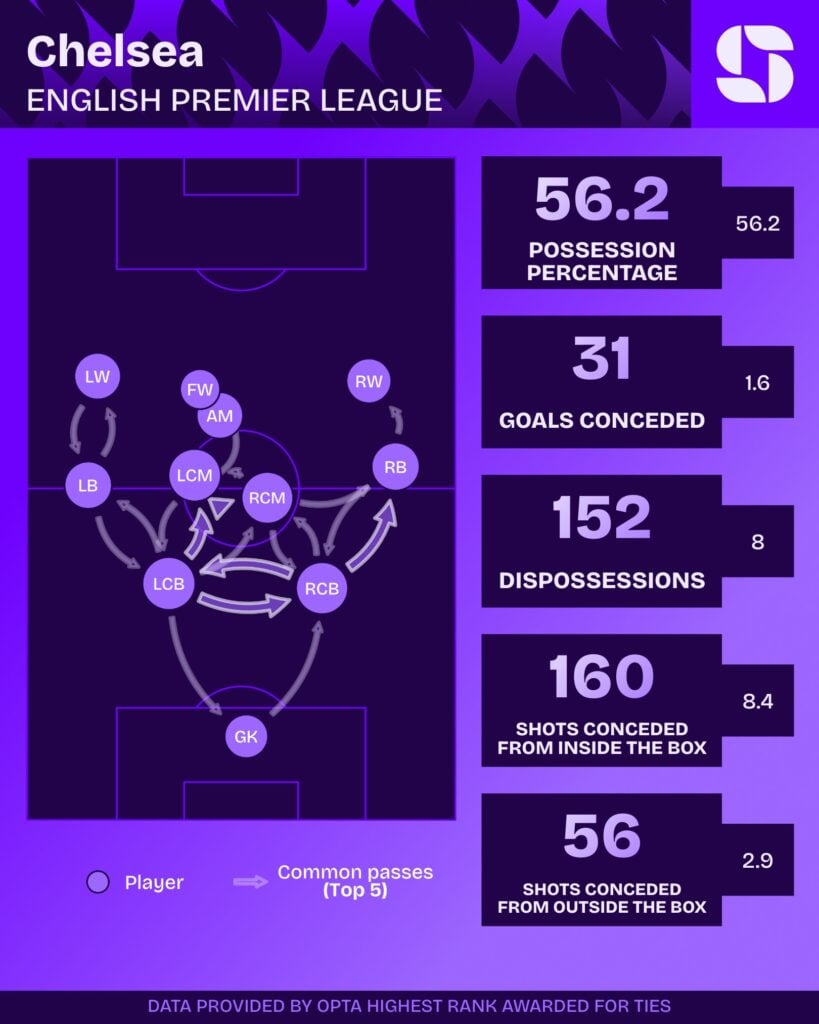
Alonso’s principles of play are closer to those of Maresca, building through the thirds as a unit with a slightly slower tempo. He also looks to control the game with high possession, allowing his side to rest on the ball. It leaves them ready to work hard off the ball and press/counter press with intensity.
The Spaniard has a good history of coaching with difference defensive methods, too. He implements a solid hybrid press from a 5-2-3 midblock, shifting to a 4-4-2 and has the ability to press man-for-man across the entire pitch.
Both his in-possession and out-of-possession ideas will help to solidify Chelsea defensively. A few new signings, adding extra physical attributes and leadership, could also play a huge part in achieving this.
Change the culture
Chelsea will be hoping to reset the culture at the club this summer. Alonso is set to have more transfer control than previous coaches at the club.
Enzo Fernandez, Marc Cucurella, Pedro Neto and Wesley Fofana are just some of the names reportedly either keen to leave the club, or who could be moved on. Alonso will be looking to form a group of committed players to build around.
By moving on a number of senior stars, Chelsea would have the funds to reinvest and strengthen their core in key areas. They’d need a new central defender and holding midfielder, giving Alonso his own print on the side.
Intensity and work rate, both on and off the ball, will be a key feature under Alonso. Those who aren’t willing to buy in on both ends could find themselves left out.
Fix attacking synergy
Chelsea’s synergy in their attacking unit was another key issue across the season. They lacked the key relationships to enhance the qualities of each individual within the system.
Maresca’s Chelsea struggled with a lack of one-on-one quality on either flank. Rosenior’s Blues struggled to click in the final third, with close-proximity combination play. Either way, the balance wasn’t struck in the attack, which capped their ceiling as a unit.

Alonso’s Chelsea will often set up in a similar 3-2-4-1 on the ball. The structure will be key in the early stages to provide a number of passing options for each player, as they look to build through the thirds and establish settled possession.
However, once they manage that, Alonso has a slightly less rigid view of positional play in the opposition half. He allows his attackers to combine and interchange positions.
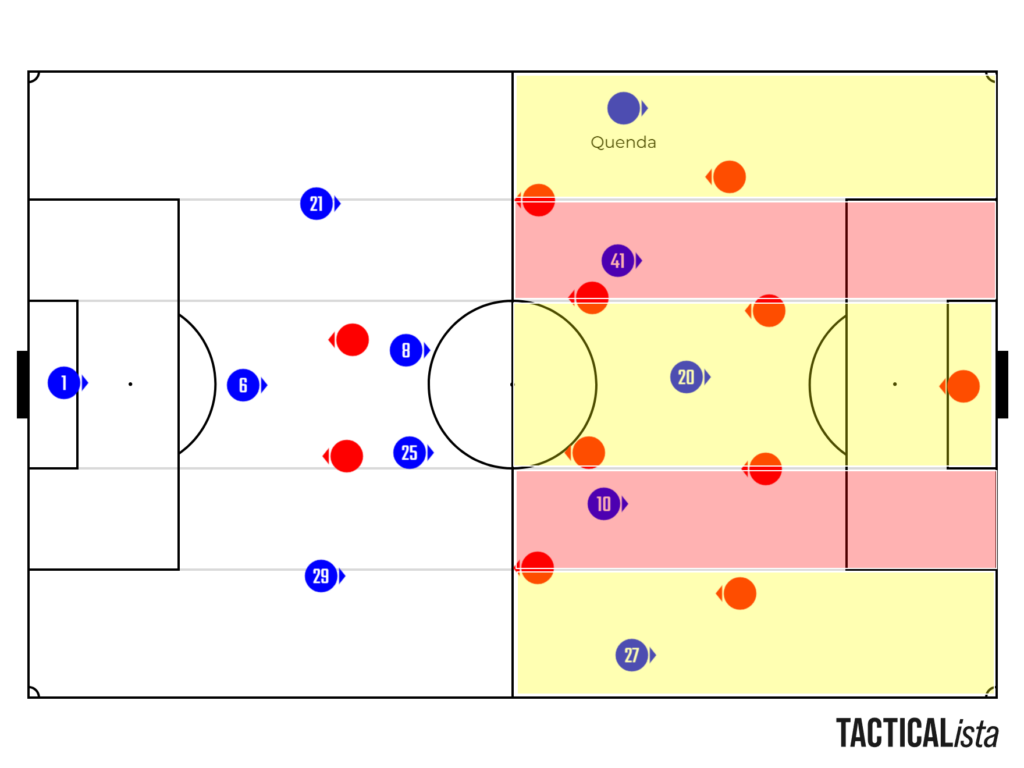
While Alonso primarily still looks to have five forwards and fill each of the five vertical channels, the forwards aren’t fixed to their own zone. Instead, players can move into vacated zones and come towards each other to create proximity around the ball.
The main principle of play in attack is that if someone comes towards play, another forward makes an opposing movement. Alonso’s sides always look to provide width, depth (runs beyond) and proximity for the ball player.
Maximise youth talent
Alonso will certainly be looking to add more quality and experience to his squad this summer. But it will also be important for him to provide pathways to some of Chelsea’s top academy talents. It will save Chelsea money in certain areas, while also utilising the quality from Cobham.
Josh Acheampong could look for a move away from Chelsea if he isn’t give a clear role and pathway. But being a hybrid right-back/right centre-back with incrediblt athletic traits, Acheampong would suit Alonso’s system like a glove. The failure to implement him this season was seen as a big failure by fans.
The likes of Jesse Derry, Ryan Kavuma-McQueen and Shim Mheuka have all been given senior minute this season as promising attackers from the academy. Another name who could suit Alonso’s system perfectly as a wing-back is Genesis Antwi.
If Alonso can harness the quality from Cobham to fill vital squad roles, Chelsea can focus their summer spending in fewer areas. It would allow them to make additions of both quality and experience.