






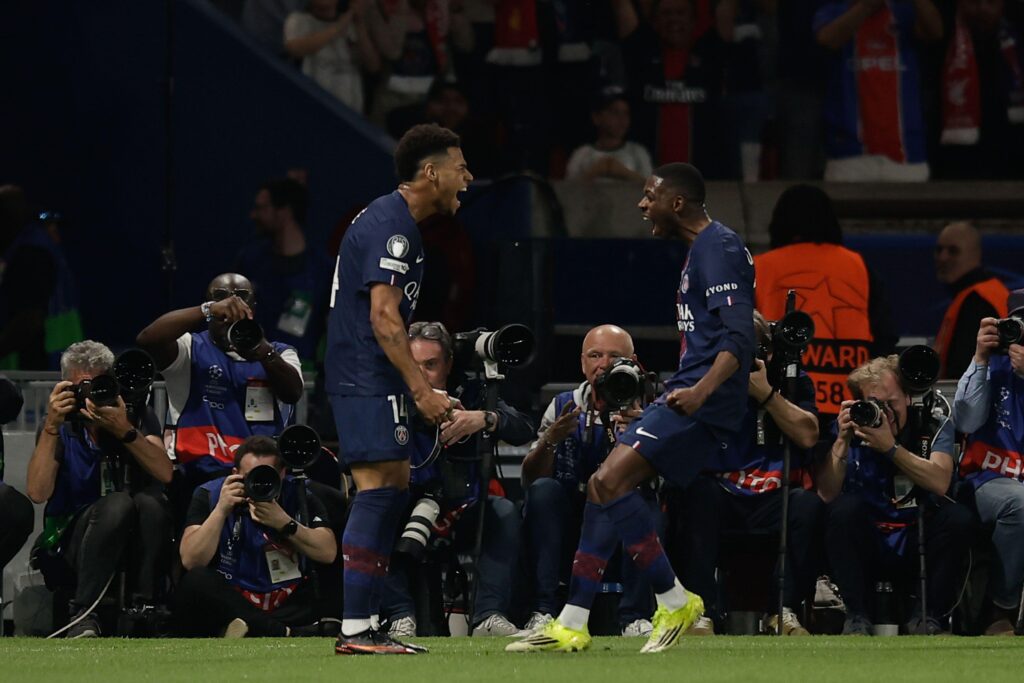
Paris Saint-Germain beat Liverpool 2-0 in the first leg of their Champions League quarter-final on Wednesday night.
Luis Enrique and his side may feel hard done by that they only take a two-goal lead to England next week. The Parisians took 18 shots against Liverpool, creating four big chances and generating 2.20 Expected Goals.
Liverpool, meanwhile, only managed three shots in the entire match with an xG of just 0.18. And they only held 26% possession.
In this article, we’ll cover
PSG’s zone replacement
Enrique’s side are often praised for their fluid movements between players. The full-backs pop up in central areas, the front three switch positions and the likes of Vitinha and Joao Neves drop into full-back zones to aid progression.
This was in full effect against Liverpool. Both Achraf Hakimi and Nuno Mendes were joining the frontline, interchanging lanes with the front three of PSG and causing problems for the Liverpool defenders who struggled to keep their marking references.
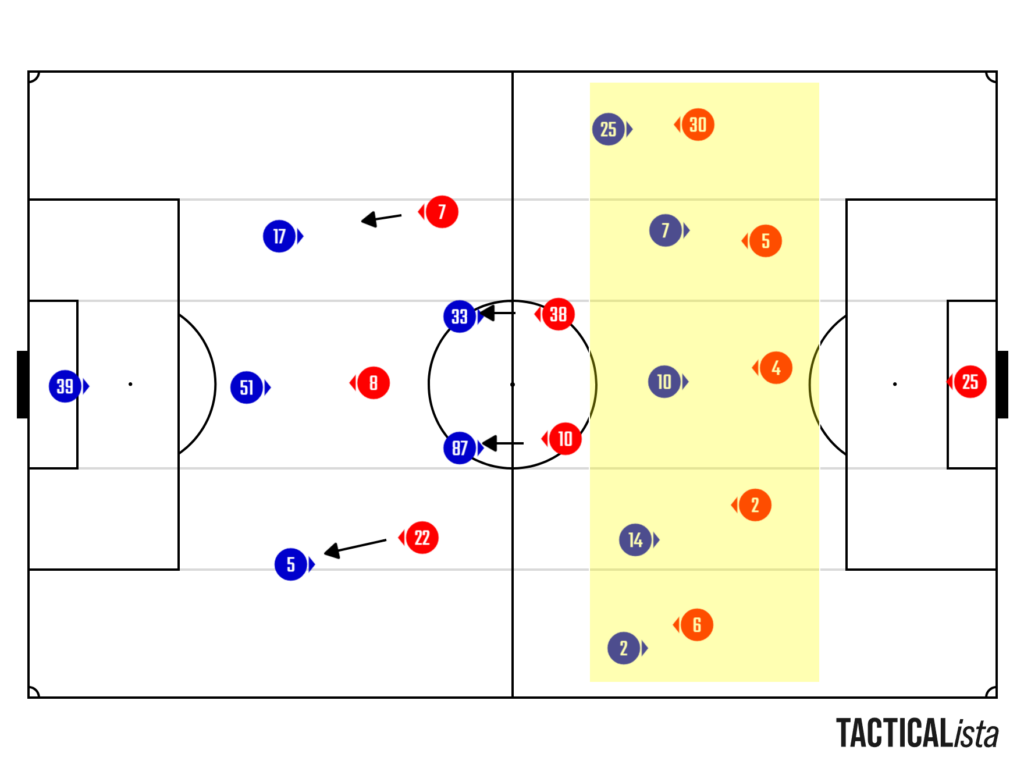
All three of Desire Doue, Ousmane Dembele and Khvicha Kvaratskhelia were happy to cross over and interchange positions, forcing the Liverpool backline to either follow them to opposite sides of the pitch or pass their marker on, which requires constant communication and reorganisation.
While Liverpool’s centre-acks did occasionally follow their attacking counterpart into deeper areas, the Reds looked uncomfortable carrying this out. It allowed the PSG forwards to manipulate them and find overloads in other areas of the pitch.
Each and every player understands the role and responsibility in each zone of the pitch, which allows them to rotate fluidly without compromising the structural integrity of the team, as even the forwards understand and fulfill their defensive responsibility should they find themselves in midfield zones.
SpreadEx Sign-Up Offer:
SpreadEx are offering new customers the chance to get £60 in free bets when they join and place £10 in qualifying bets.
To claim this offer, follow these steps:
- Create your account by clicking this link or the image below.
- Register for your account by adding your details. It only takes a few minutes.
- Make your first deposit then place a £10 single or £10 each-way fixed odds bet at minimum odds of 1/2
- Get 3 x £10 free fixed odds bets, 3 x £5 Total Goals football spread bets and 3 x £5 Winning Favourites spread bets on consecutive days and a £1 racing Race Index spread bet

Spread betting losses can exceed deposit. 18+ www.gambleaware.org. Place a £10 fixed odds single or £10 each-way bet at minimum odds of 1/2 and get 3 x £10 free fixed odds bets, 3 x £5 Total Goals football spread bets and 3 x £5 Winning Favourites spread bets and a £1 racing Race Index spread bet.
Liverpool’s 5-2-3 block
Arne Slot tried to switch things up against PSG. He set his side up in a back five, looking to sit in a more passive 5-3-2 block, while looking to jump man for man when possible to apply pressure on the ball.
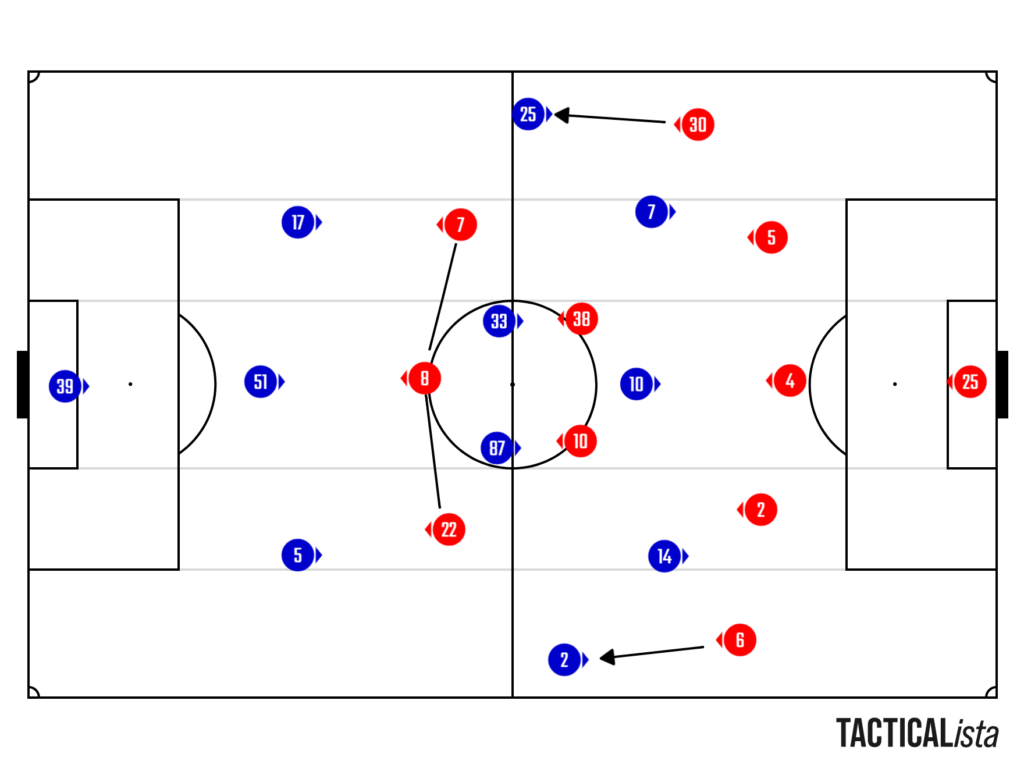
Dominik Szoboszlai was in the middle of a front three looking to block access to the pivot. Florian Wirtz and Hugo Ekitike were either side, looking to block those central passing lanes, but ready to apply pressure to the wide centre-backs.
Liverpool then had Ryan Gravenberch and Alexis Mac Allister looking to protect the middle of the pitch. And the wing-backs were instructed to jump out and apply pressure to the PSG full-backs to transition the press.
The centre-back on the same side as the full-back jump (Ibrahima Konate or Joe Gomez) would then shuffle over to take the PSG wide man, forming a temporary back four.
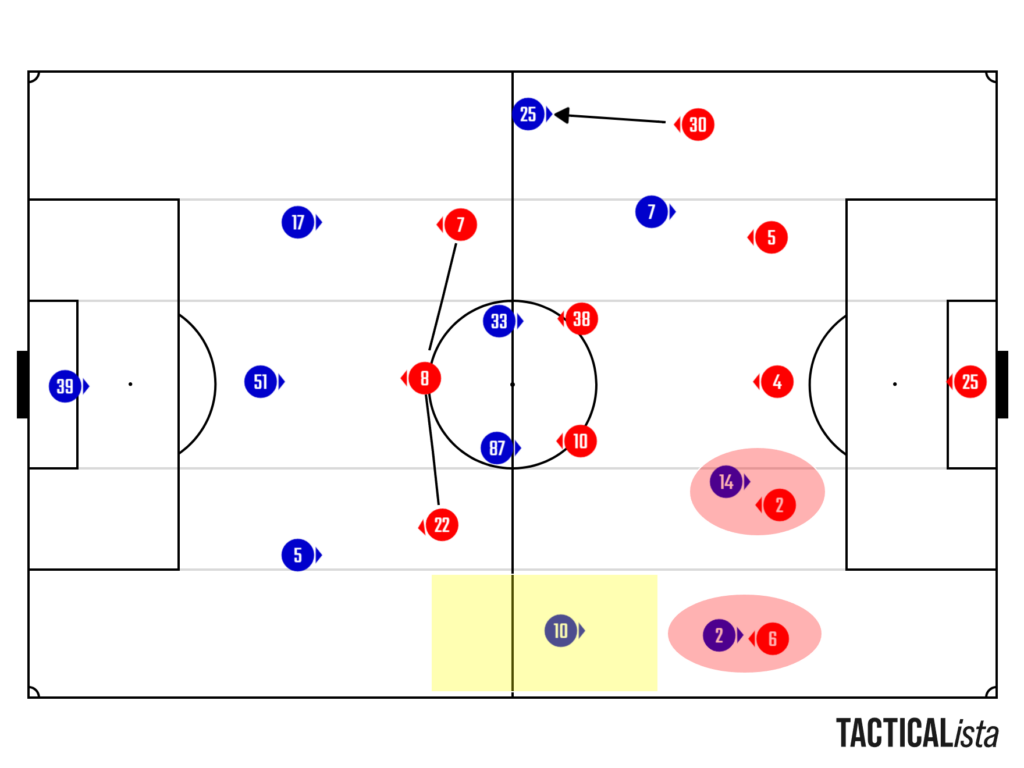
There was space for PSG on the axis between Liverpool’s wingers and the wing-backs when they were dragged deep, allowing the forwards such as Dembele to rotate out of the block and probe from these pockets of space.
Having easier access to the sides and being able to create a +1 at times allowed PSG to utilise combinations before attacking the stretched gates in Liverpool’s defensive line.
PSG’s side connections
A key network of rotations used by PSG is their wide triangles. it often consists of a wide attacker, a central midfielder and the full-back.
This again goes back to the zone replacement principles, as each player is comfortable at the base of the triangle (inside and deeper), holding the width (outside) and at the top of the triangle (inside and higher).
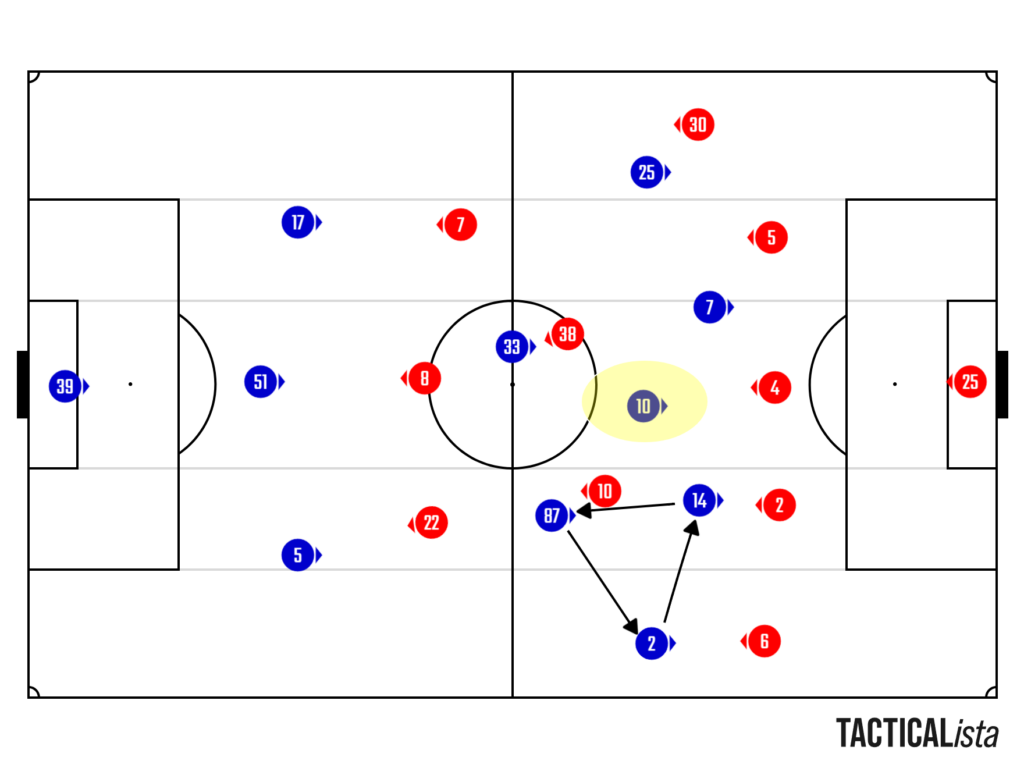
On a number of occasions, Hakimi will find himself as the highest member of the right-sided triangle, essentially pinning the opposition backline, while a forward drops deeper to get touches and manipulate the block and the midfielder rotates out to hold width.
PSG’s second goal was made from one of these patterns of play. Neves found himself in a wide position on the left, Mendes was making a run to threaten the Liverpool defensive line and Kvaratskhelia made a run from deep to arrive in the gate between Konate and Virgil van Dijk.
Full-backs’ importance
The PSG full-backs are vital components to the attacking dynamics and in possession principles for Enrique’s side. They constantly move and look to fill holes as the attackers float with freedom around the pitch.
Whether they are making bursting runs into the box to finish off moves, creating space with their movement to take markers away or providing combination support, the PSG full-backs are excellent at platforming for others and providing the best conditions for others to thrive.
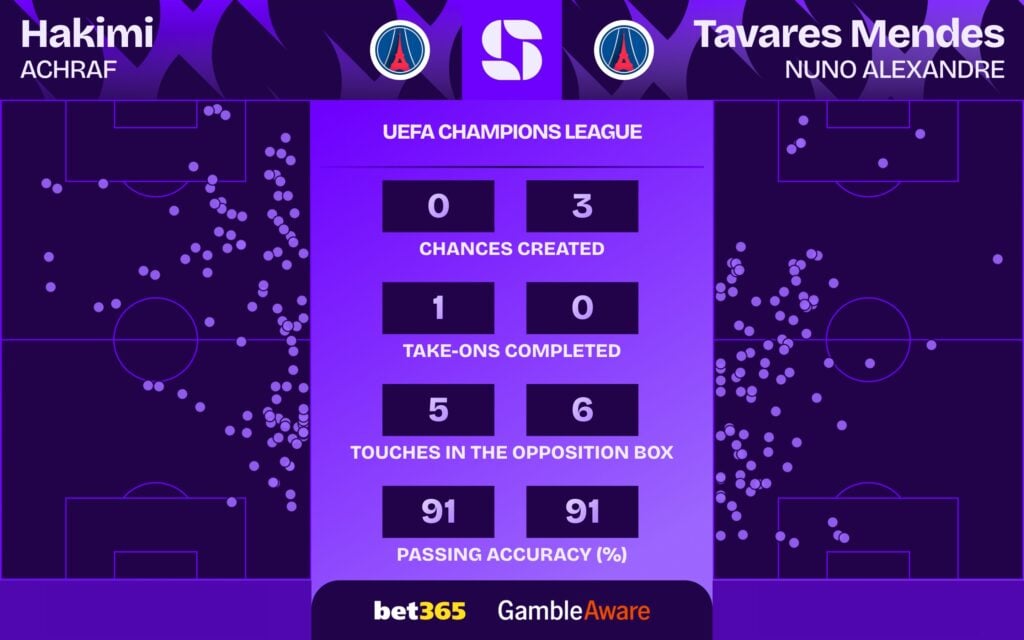
Their attacking importance is clear when looking at their stats, having five and six touches respectively in the opposition box, often numbers only forwards or attack-minded midfielders achieve.
Both Hakimi and Mendes are superb athletes, have the engines to run all night long, but also the tactical understanding of where to be and how to effect the game even without touching the ball.